
Category: Humility, meekness

  • Humility and the Pride That Drowns Out Everything Else 

    One of my first jobs after high school was as a general laborer for an oilfield service company. Whatever grunt labor was needed, I did. I handled a shovel, a jackhammer, a paintbrush and a hammer. None with any particular skill, but with the energy of youth. It was a job, and it paid well enough.

    I was thinking of one job in particular. We were painting in the compressor area of a gas plant. We used some kind of aluminum paint on the running machinery, so hot that the paint sizzled and dried as fast as it hit the metal. Who knows what we were inhaling.

    I don’t remember exactly what function that area of the plant performed, but it was so loud I couldn’t hear my workmate talking from 3 feet away.  Of course we had no hearing protection, and that kind of work is what eventually led to me wearing hearing aids today.

    It was the mid-1970s, and safety gear existed, but everyone scoffed at it, and no one used it. We didn’t use masks or hearing protection. The only gear we used was hard hats and steel-toed boots.  We all thought we were tough enough not to need gear designed for wimps. Oh, how wrong we were.

    Our pride in not wearing the gear that would protect us was self-serving nonsense. Our pride was as loud as the compressor noise and drowned out everything else.

    Pride is dangerous. I’m not talking about the satisfaction of doing something well; I mean the kind that tells us we know better than others and stokes our inflamed egos.

    The Fall in the garden was caused because, in their pride, Adam and Eve wanted to be like God. We see pride causing problems throughout the Bible and throughout history. If we are honest, we can all think of a time when our own pride caused issues in our lives.

    The Bible warns us of the dangers. The Bible mentions the subject in dozens of places.

    Pride goes before destruction, and a haughty spirit before a fall. Proverbs 16:18 ESV

    In the pride of his face the wicked does not seek him; all his thoughts are, “There is no God.” Psalm 10:4 ESV

    For if anyone thinks he is something, when he is nothing, he deceives himself.Galatians 6:3 ESV

    For by the grace given to me I say to everyone among you not to think of himself more highly than he ought to think, but to think with sober judgment, each according to the measure of faith that God has assigned. Romans 12:3 ESV

    Pride keeps us from acknowledging our sin and inability to fix ourselves. It separates us from God by choice and leads to destruction if left unchecked.

    God calls us to humility. The humble person puts others first and doesn’t think themselves better than others. The humble person knows they need God’s help to do what we cannot.

    True humility isn’t being a doormat or thinking you have no value. It’s knowing who you are and choosing out of love to value others. Christ is the ultimate example of being humble. He set aside all the power and trappings that were his by right and came to save us.

    May we learn to set aside our foolish, destructive pride and learn to walk humbly with God.

    Kevin

    SUMMARY

    Pride is dangerous because it keeps us from acknowledging our sin and separates us from God. God calls us to set aside our destructive pride and learn to walk humbly with Him.

    TAKEAWAY

    Pride can get as loud as that compressor and drown out everything else, even the things meant to protect you.

    Pride keeps you from acknowledging your sin and your inability to fix yourself. Left unchecked, it separates you from God and leads to destruction.

    True humility isn’t being a doormat or thinking you have no value. It’s knowing who you are and choosing out of love to value others, just as Christ set aside what was His by right to save you.

    YOU MIGHT ALSO LIKE

    Why everyone knows the truth, even if they deny it
    The good news of the gospel

    Big Bucks and the dangers of pride

    Paul’s Path to humility

  • Paul’s Path to Humility: What His Letters Reveal

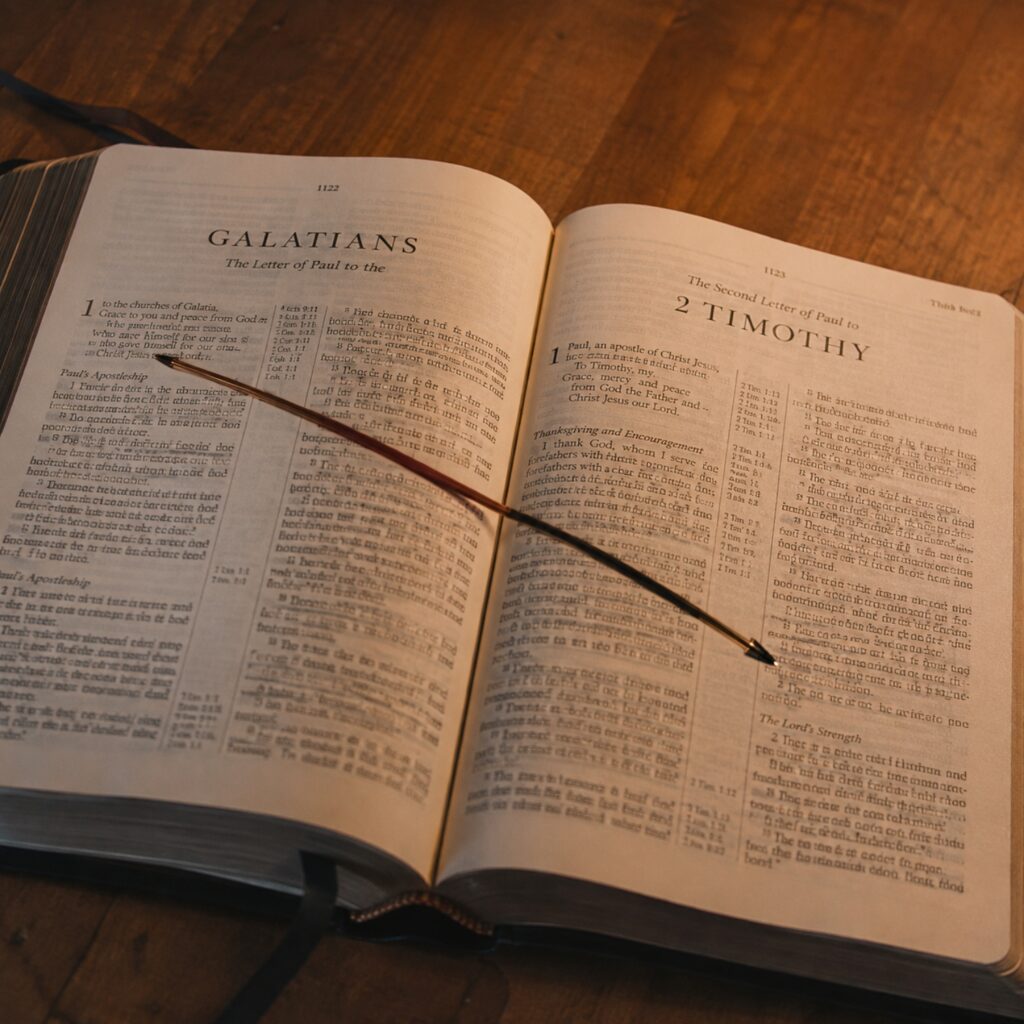
    open bible with arrown suggestion the growth in Paul's humility

    In most circumstances, I am a generally confident man. Often, that confidence has stepped over the line into arrogance. That’s not a trait I’m proud of, especially since we are called to humility and meekness.

    So if there is any encouragement in Christ, any comfort from love, any participation in the Spirit, any affection and sympathy, complete my joy by being of the same mind, having the same love, being in full accord and of one mind. Do nothing from selfish ambition or conceit, but in humility count others more significant than yourselves.  Let each of you look not only to his own interests, but also to the interests of others. Have this mind among yourselves, which is yours in Christ Jesus, who, though he was in the form of God, did not count equality with God a thing to be grasped, but emptied himself, by taking the form of a servant, being born in the likeness of men. And being found in human form, he humbled himself by becoming obedient to the point of death, even death on a cross. Philippians 2:1-8 ESV

    We often think of Peter as being brash and arrogant at times, for good reason. Yet there is someone else whom we might not think of that way: the Apostle Paul. It’s not something that leaps out to most people, possibly because the epistles don’t appear in chronological order, but are arranged by size (largest to shortest). If we read them in the order they were written, we see it more clearly.

    Chronologically, they read Galatians, 1 & 2 Thessalonians, 1 & 2 Corinthians, Romans. Ephesians, Colossians, Philemon, Philippians, 1 Timothy, Titus, and 2 Timothy.

    Let’s look at how Paul identifies himself in his letters.

    Paul, an apostle—not from men nor through man, but through Jesus Christ and God the Father, who raised him from the dead. Galatians 1:1 ESV

    Paul, a servant of Christ Jesus, called to be an apostle, set apart for the gospel of God Romans 1:1 ESV

    I thank him who has given me strength, Christ Jesus our Lord, because he judged me faithful, appointing me to his service, though formerly I was a blasphemer, persecutor, and insolent opponent. But I received mercy because I had acted ignorantly in unbelief, and the grace of our Lord overflowed for me with the faith and love that are in Christ Jesus. The saying is trustworthy and deserving of full acceptance, that Christ Jesus came into the world to save sinners, of whom I am the foremost. 1 Timothy 1:12-15 ESV

    Everything Paul claims is true, but he moves from seeing himself as an exalted apostle to a servant (more properly translated as a slave). By the end, he fully acknowledges that he is a sinner saved by grace, undeserving of the role God has placed on Him.

    The more he knew Christ, the longer He knew Him, the less Paul exalted himself and the more he magnified Jesus. He grew in humility.

    It’s a lesson I’m working on. What about you?

    Be blessed today,

    Kevin

    SUMMARY

    I’ve always been a confident man, sometimes too confident, tipping over into arrogance. Tracing Paul’s letters in the order he actually wrote them shows me something convicting: the longer he walked with Christ, the more his self-description shrank from apostle to servant to the foremost of sinners.

    TAKEAWAY

    Reading Paul’s epistles in chronological order (not the order they appear in Scripture) reveals a clear pattern in how he identifies himself

    Paul moves from calling himself an apostle, to a servant (slave) of Christ, to the foremost of sinners saved by grace

    The more Paul knew Christ, the less he exalted himself and the more he magnified Jesus — he grew in humility

    Some posts you might enjoy

    Should we be concerned about right living or right belief?

    Every member of the church has a purpose

    Growing in maturity and character

    An impossible task made doable

    Humilty and pride