
Category: Amos

  • Darkness in Scripture: From Egypt to the Cross

    Hope in the darkness
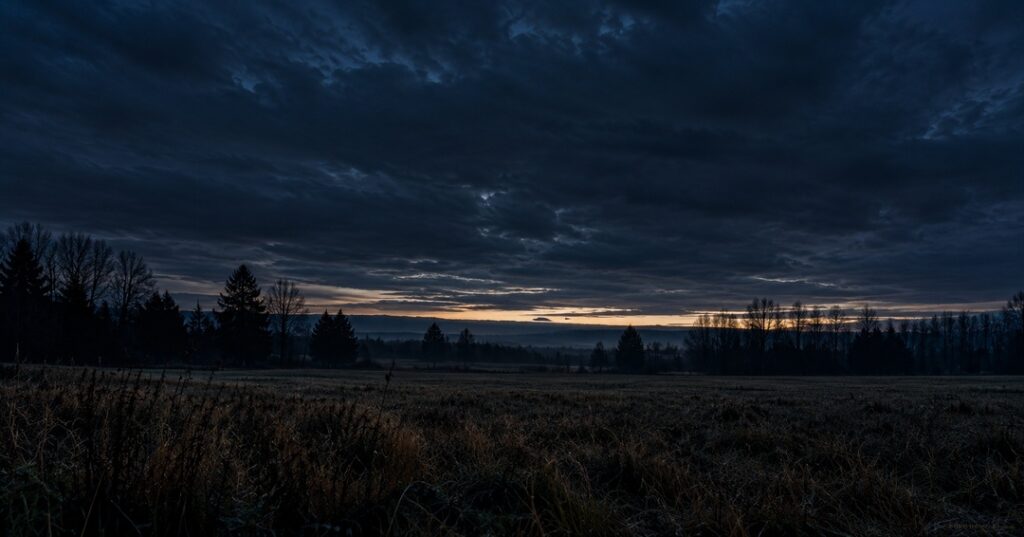
    dark morning just before sunrise, a sliver of light visible

    It’s almost 7:00 AM, and it’s still dark outside my window. I know that’s normal for this time of year, but I miss the summer days when it’s already full daylight, and the birds have been singing for hours. I’m grateful I no longer live farther north, where the days are even shorter. Oh, well, in just over two months, the days will start getting longer by a small margin.

    Yesterday, I wrote about the crucifixion, particularly the hyssop branch used to offer Jesus a drink as He thirsted. As I read the various accounts of the crucifixion in the gospels, I was struck by the period of darkness that preceded Jesus’ death.

    And it was about the sixth hour, and there was a darkness over all the earth until the ninth hour. Luke 23:44 ESV

    It’s just one short sentence in Luke, but the event is also included in Matthew and Mark.  Why a period of darkness in the Scripture? In the Old Testament, darkness was associated with the Lord’s judgment.

    “And on that day,” declares the Lord God, “I will make the sun go down at noon and darken the earth in broad daylight. I will turn your feasts into mourning and all your songs into lamentation; I will bring sackcloth on every waist and baldness on every head; I will make it like the mourning for an only son and the end of it like a bitter day.” Amos 8:9-10 ESV

    The plague of darkness was the final plague on Egypt before the Passover.

    Then the Lord said to Moses, “Stretch out your hand toward heaven, that there may be darkness over the land of Egypt, a darkness to be felt.” So Moses stretched out his hand toward heaven, and there was pitch darkness in all the land of Egypt three days. They did not see one another, nor did anyone rise from his place for three days, but all the people of Israel had light where they lived. Exodus 10:21-23 ESV

    Darkness is also a sign of the coming day of the Lord.

    Blow a trumpet in Zion; sound an alarm on my holy mountain! Let all the inhabitants of the land tremble, for the day of the Lord is coming; it is near, a day of darkness and gloom, a day of clouds and thick darkness! Like blackness there is spread upon the mountains a great and powerful people; their like has never been before, nor will be again after them through the years of all generations.Joel 2:1-2 ESV

    The sun shall be turned to darkness, and the moon to blood, before the great and awesome day of the Lord comes. Joel 2:31 ESV

    If times seem dark or you’re going through a period of personal darkness, don’t despair. God didn’t abandon His people then, and He won’t abandon you now. His timing is perfect.

    Hold fast, my friends. The Light is nearby.

    Be blessed.

    SUMMARY

    Throughout Scripture, darkness signaled the Lord’s judgment. God didn’t abandon His people then, and He won’t abandon you in your darkness now.

    TAKEAWAY

    Luke gives the darkness at the cross a single sentence, but Matthew and Mark record it as well.

    In the Old Testament, darkness marked the Lord’s judgment, from the final plague on Egypt before the Passover to the prophets’ warnings about the day of the Lord.

    If you’re going through a period of personal darkness, don’t despair. God didn’t abandon His people then, and He won’t abandon you now.

    YOU MIGHT ALSO LIKE

    Why everyone knows the truth

    Celebrate your identity

    Right belief or right living

    Spelunking – into the darkness

  • Snatched from the Fire

    Mercy without excusing sin

    I often hear people say the Old Testament has no value today, and I completely disagree. I was reading in the Minor prophets this morning and hit a verse in Amos where the wording immediately brought to mind some parallel passages.

    I was in Amos, and the Lord is rebuking Israel for their unfaithfulness. He had rescued them from harm and yet they still rebelled.

    “I overthrew some of you, as when God overthrew Sodom and Gomorrah, and you were as a brand plucked out of the burning; yet you did not return to me,” declares the Lord. Amos 4:11 ESV

    That reminded me of another verse, one I wrote about recently. Satan is accusing the High Priest before God. The Lord extends compassion and mercy without excusing the sin.

    Then he showed me Joshua the high priest standing before the angel of the Lord, and Satan standing at his right side to accuse him. The Lord said to Satan, “The Lord rebuke you, Satan! The Lord, who has chosen Jerusalem, rebuke you! Is not this man a burning stick snatched from the fire?” Zechariah 3:1-2

    A burning stick pulled from the fire suggests something (or someone) being pulled from the very precipice of danger. The stick has already begun to burn; it will be unsalvageable shortly.

    That, too, led me to the New Testament book of Jude.

    But, dear friends, remember what the apostles of our Lord Jesus Christ foretold. They said to you, “In the last times there will be scoffers who will follow their own ungodly desires.” These are the people who divide you, who follow mere natural instincts and do not have the Spirit. But you, dear friends, by building yourselves up in your most holy faith and praying in the Holy Spirit, keep yourselves in God’s love as you wait for the mercy of our Lord Jesus Christ to bring you to eternal life. Be merciful to those who doubt; save others by snatching them from the fire; to others show mercy, mixed with fear—hating even the clothing stained by corrupted flesh.  Jude 1:17-23 ESV

    The metaphor of the burning branch is clear in the New Testament as it stands, but our understanding is enriched by seeing it through Old Testament eyes, as Jude’s audience would have.

    There is an interesting progression in Jude’s letter.

    Jude 22 — mercy toward those who doubt

    Jude 23a — actively rescue those in greater danger

    Jude 23b — remain morally separated from the contamination itself

    That combination is very much at home in the Old Testament: compassion for the person, intervention to rescue the person, and rejection of the sin/uncleanness.

    Jude’s audience were living in dark times with many mocking and oppressing them, and things were getting worse. Does that sound familiar? Yet they were to be merciful, offer the grace of God and reject sin.

    That’s the way Christians are called to live. It isn’t a New Testament “thing”; it’s been God’s way from the beginning.

    May we find ourselves living and preaching the gospel and snatching others from the very fires of Hell.

    Be blessed

    Kevin

    SUMMARY

    A verse in Amos this morning tied together the rescue images in Amos, Zechariah, and Jude, all showing God’s mercy without excusing sin. Jude’s call to show mercy, rescue the endangered, and still reject sin isn’t new; it’s the same pattern God used long before the New Testament.

    TAKEAWAY

    Amos, Zechariah, and Jude all picture someone already burning, pulled out before the fire consumes them.

    You’re called to follow Jude’s pattern toward others: mercy for those who doubt, active rescue for those in greater danger, and a clear rejection of the sin itself.

    You can trust that pairing mercy with truth isn’t a New Testament invention. It’s how God has dealt with people from the start.

    Your might find these interesting

    The good news of the gospel

    Celebrate your identity

    Hey Jude

    God’s all consuming fire