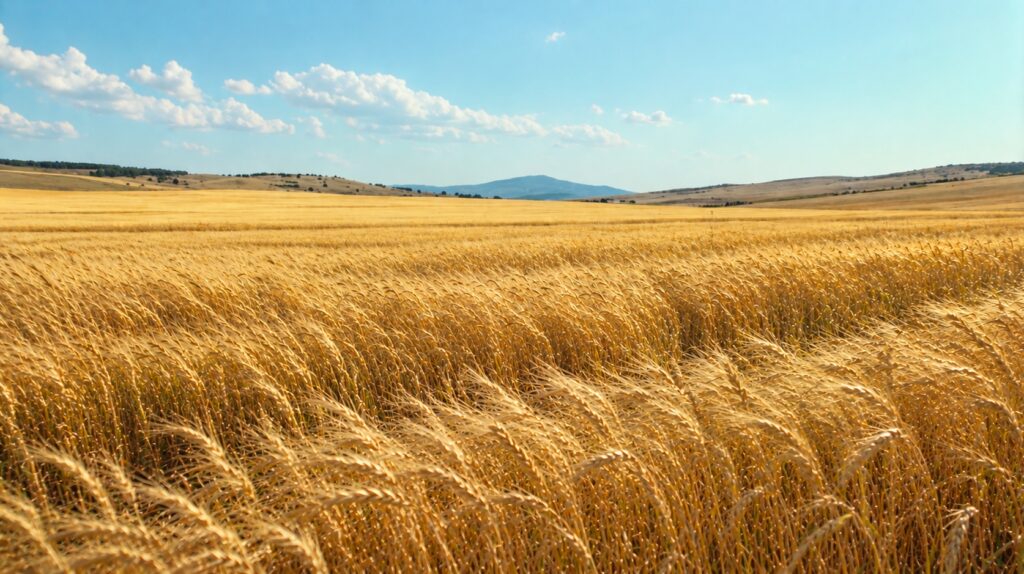
I watched the wind blow across the countryside through the wheat fields. The waves of wheat reminded me of the ocean. The view changed moment by moment at the wind’s whim.
The train of thought is too long to explain, but I ended up thinking of wind in the bible. The Hebrew word is ruach, but it means much more than wind. It also means breath and spirit. One word, three meanings.
I think the word leaves a fabulous trail through the Scriptures
We see the spirit, the wind, the breath of God from the very beginning.
The earth was without form and void, and darkness was over the face of the deep. And the Spirit of God was hovering over the face of the waters. Genesis 1:2 ESV
A few verses later, God breaths life into Adam. A different word is used, but it’s still God’s Spirit.
Fast forward to Ezekiel standing in the valley of dry bones. The Spirit breathes life into the dead bones, and they rise.
The hand of the Lord was upon me, and he brought me out in the Spirit of the Lord and set me down in the middle of the valley; it was full of bones. And he led me around among them, and behold, there were very many on the surface of the valley, and behold, they were very dry. And he said to me, “Son of man, can these bones live?” And I answered, “O Lord God, you know.” Then he said to me, “Prophesy over these bones, and say to them, O dry bones, hear the word of the Lord. Thus says the Lord God to these bones: Behold, I will cause breath to enter you, and you shall live. And I will lay sinews upon you, and will cause flesh to come upon you, and cover you with skin, and put breath in you, and you shall live, and you shall know that I am the Lord.” So I prophesied as I was commanded. And as I prophesied, there was a sound, and behold, a rattling, and the bones came together, bone to its bone. And I looked, and behold, there were sinews on them, and flesh had come upon them, and skin had covered them. But there was no breath in them. Then he said to me, “Prophesy to the breath; prophesy, son of man, and say to the breath, Thus says the Lord God: Come from the four winds, O breath, and breathe on these slain, that they may live.” So I prophesied as he commanded me, and the breath came into them, and they lived and stood on their feet, an exceedingly great army. Ezekiel 37:1-10 ESV
Now let’s skip ahead to the New Testament; the wording is Greek now, not Hebrew, but it’s the same Spirit.
Jesus is speaking…
And when he had said this, he breathed on them and said to them, “Receive the Holy Spirit. John 20:22 ESV
God’s Holy Spirit is the giver of life and rebirth.
When you feel as dry and empty as dead bones, remember where life comes from. It’s God who gives life; turn to Him. Breathe Him in again.
May you be filled with the Spirit today.
Kevin
SUMMARY
Watching wind move through a wheat field sent me tracing ruach, the Hebrew word for wind, breath, and spirit. From Genesis to Ezekiel’s dry bones to John, it shows that God’s Holy Spirit is the giver of life and rebirth.
TAKEAWAY
Ruach means wind, breath, and spirit, so the Spirit of God hovering over the waters in Genesis 1:2 is the same breath of God you can trace through all of Scripture.
In Ezekiel’s valley, the bones had sinews, flesh, and skin, yet no breath was in them until God sent it. The life you need is His to give.
When you feel as dry and empty as dead bones, remember where life comes from. Turn to God and breathe Him in again, the same Holy Spirit Jesus gave with a breath in John 20:22.
CONSIDER THESE POSTS
The gospel – the best news ever.
Celebrate your identity in Christ