
Different gifting, same calling
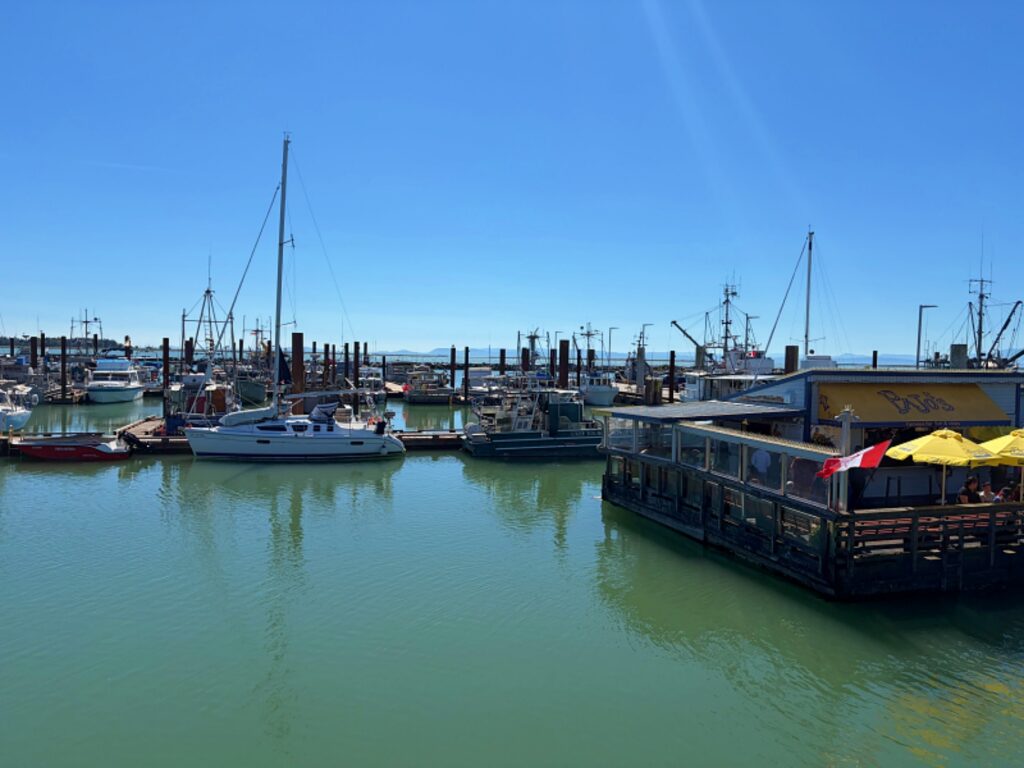
Earlier this week, we enjoyed a day trip to nearby Steveston Harbor in Richmond, BC. Founded as a separate community in the 1880’s, Steveston was home to numerous large-scale salmon canneries and fishing fleets. It’s still home to 600 fishing boats, the largest fleet in Canada. Seafood fresh off the boat can be purchased along Fisherman’s Wharf.
It’s home to several whale-watching tour groups who head out regularly to catch views of orcas and humpbacks. We didn’t take a tour, but we still saw seals and otters around the wharf area.
The downtown area, with many early 1900s historical buildings and the wharf, has been used in dozens of TV shows and movies. You may have seen Steveston without ever going there.
A walk along the boardwalk and downtown brings you to more restaurants than you can count, fish markets, gift shops, a museum and stores of all kinds. Lining the boardwalk are signs about maritime heritage, including one that helps you understand what the different fishing boats look like and how they operate.
Different species need different types of equipment. That makes sense. It’s also true when fishing for people. We are called to be fishers of men, but that doesn’t mean we all do it the same way.
While walking by the Sea of Galilee, he saw two brothers, Simon (who is called Peter) and Andrew his brother, casting a net into the sea, for they were fishermen. And he said to them, “Follow me, and I will make you fishers of men.” Immediately they left their nets and followed him. And going on from there he saw two other brothers, James the son of Zebedee and John his brother, in the boat with Zebedee their father, mending their nets, and he called them. Immediately they left the boat and their father and followed him. Matthew 4:18-22 ESV
And Jesus came and said to them, “All authority in heaven and on earth has been given to me. Go therefore and make disciples of all nations, baptizing them in the name of the Father and of the Son and of the Holy Spirit, teaching them to observe all that I have commanded you. And behold, I am with you always, to the end of the age.” Matthew 28:18-20 ESV
All of us are called to share the gospel, but not all of us are gifted as evangelists. Does that lack of gifting excuse us from sharing the truth? Absolutely not.
We use the gifts, talents and tools God has given us. Some people are naturally inviters, and they invite people to church. Others have the gift of making conversation, and matters of faith come up easily.
Still others live their lives striving to imitate Christ and love others. That can make people curious, and they ask about why you are that way. After all, loving your neighbor, walking in integrity and humility and not worrying seem strange to our world today.
Perhaps you are a prayer warrior, laying down covering fire for the evangelists and praying for specific people to come to know the Lord.
Maybe you are called to stand on a street corner with a Jesus is near sign and a megaphone. That’s not my thing, but if it’s what God calls you to, you need to listen.
Perhaps it’s going door to door and giving out tracts. Tracts have been around a long time, and while many get thrown away, people have come to know the Lord that way.
For me, it’s in relationships and conversation. I try to be alert to opportunities to discuss matters of faith and plant seeds. Sometimes they seem to go nowhere; other times they lead to deeper conversations.
God knows you, and He knows people you can reach. Different fish are caught by different methods.
God is responsible for the results. Only the Holy Spirit can change hearts. Still, we are responsible for doing our part.
There are plenty of lost people out there. Let’s follow our calling and go fishing for them every day. Eternity matters.
Kevin
SUMMARY
Walking the Steveston boardwalk, I saw signs explaining how different boats and gear are built to catch different kinds of fish, and it struck me that fishing for people works the same way. Jesus calls all of us to be fishers of men, but He doesn’t call us all to fish the same way.
TAKEAWAY
Different fish require different equipment, just as God gives each believer different gifts for reaching people with the gospel.
Not everyone is gifted as an evangelist, but that doesn’t excuse anyone from sharing the truth in whatever way God has equipped them.
Whether through invitation, conversation, prayer, tracts, or simply living faithfully, God is responsible for the results; we’re responsible for using our gifts.
You Might also enjoy
How then shall we live? Live Christian in a divided world