
Category: Psalms

  • General Revelation: Why No One Can Claim They Didn’t Know

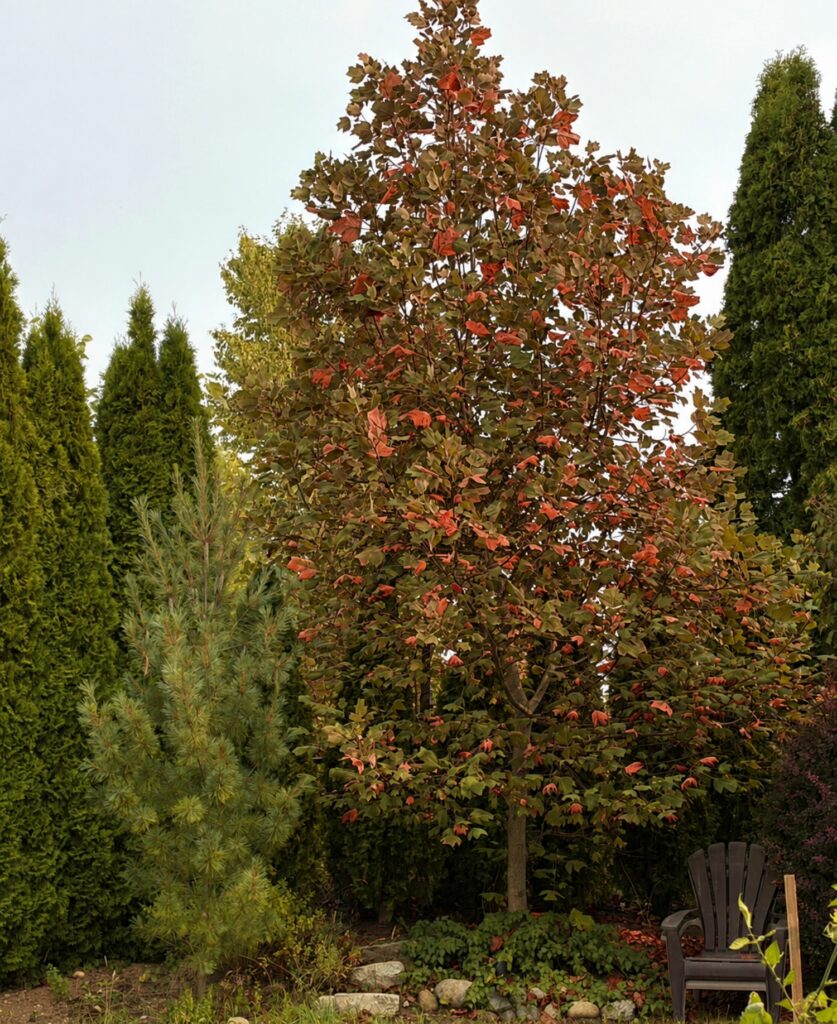
    I have a habit I did not set out to form. Most mornings, before the day gets loud, I end up outside for a few minutes. Not for any spiritual reason at first. Coffee. Fresh air. Quiet. But at some point I started noticing that the quiet was not actually quiet. Something out there was already talking.

    A bird. The light changing. The same trees that were bare a few weeks ago full again. And every time, the same thought: this did not happen by accident, and whoever is responsible for it has not stopped paying attention.

    That is not poetry. That is theology. And Scripture has been saying it since the beginning.

    God Made Sure You Would Know

    The heavens are telling of the glory of God; and the expanse is declaring the work of His hands. Day to day pours forth speech, and night to night reveals knowledge. Psalm 19:1-2

    Creation has been preaching since Genesis and has not taken a day off. You do not need a seminary degree to hear it. You need to step outside.

    Job said the same thing from a very different place. He was not in a season of quiet morning coffee. He was in ruins. And still he pointed to the birds and the beasts and the earth itself and said, ask them. They know something.

    Who among all these does not know that the hand of Yahweh has done this, in whose hand is the life of every living thing, and the breath of all the flesh of man? Job 12:9-10

    This is not a soft comfort. It is a hard fact. God has made Himself known through what He made, and He did it on purpose.

    I have written about how creation points us to a God who is near and who cares for what He has made. Creation Is a Signpost

    No One Is Without Evidence

    Here is where it gets serious.

    Paul did not write Romans 1 to comfort anyone. He wrote it to close every exit.

    For since the creation of the world His invisible attributes, both His eternal power and divine nature, have been clearly seen, being understood through what has been made, so that they are without excuse. Romans 1:20

    Without excuse. Not without opportunity. Not without enough information. Without excuse.

    From the smallest particle yet to be discovered to the edge of an expanding universe no one has mapped, God is being declared. The smaller we look, the larger the claim becomes. The further we search, the less accidental any of it is. To look at creation and conclude there is no God is not a neutral position. Scripture calls it willful. Romans 1:18 calls it suppressing the truth.

    Some Judgment Day, no one will be able to say to the LORD, I didn’t know.

    What You Do With What You Know

    General revelation, the knowledge of God available to every human being through creation, is enough to leave us without excuse. It is not enough to save us. For that, God went further. He sent His Son. He gave us His Word. He sent His Spirit to open what our own effort never could reach.

    But it starts here. Outside. Any morning. With a bird and the light changing and the quiet that is not actually quiet.

    The question creation puts to every person who has ever lived is not whether God exists. That question has already been answered. The question is what you will do with what you already know.

    Be blessed

    Kevin

    You might also like: Seeing heaven more clearly every day

    SUMMARY

    God has embedded the knowledge of His existence and care into every corner of creation, from a bird call on a quiet morning to the expanding edge of the universe, leaving every person without excuse. General revelation is enough to condemn but not enough to save, which is why God went further and sent His Son, His Word, and His Spirit.

    TAKEAWAY

    Psalm 19, Job 12, and Romans 1 together establish that creation is not passive scenery but active testimony to God’s existence, power, and care. 

    General revelation is universal and intentional — God made sure no one would be without evidence, and Scripture calls willful blindness exactly what it is. 

    Creation leaves us without excuse but not without hope; for salvation God went further, which makes the gospel not a backup plan but the completion of what creation started.


    The importance of reading the Bible. It’s your primary truth source.

  • A Lesson From the Lilies – no need to worry

    I snapped these tiger lilies some years ago. I came across them in my photo file, and they brought a passage of Scripture where Jesus reminds us to trust God to mind.

    And why are you worried about clothing? Observe how the lilies of the field grow; they do not toil nor do they spin, yet I say to you that not even Solomon in all his glory clothed himself like one of these. But if God so clothes the grass of the field, which is alive today and tomorrow is thrown into the furnace, will He not much more clothe you? You of little faith! Matthew 6:28-30

    So do not worry about tomorrow; for tomorrow will worry about itself. Each day has enough trouble of its own. Matthew 6:34

    It’s a familiar passage. I’ve often seen it illustrated with beautiful white lilies. It’s true that many lilies are white, but the Middle East has a plethora of other colorful lilies as well. 

    It’s impossible to know for certain what species of lily Jesus was speaking of, or what his hearers pictured. In fact, it might not have been a lily at all. The word translated in our English Bible is the word שׁוֹשַׁנָּה, shoshanah in the Old Testament, and κρίνον (krinon) in the New. Either word can mean any of a variety of flowers 

    The image is likely far more colorful than we picture. The call to not worry doesn’t change if we change the flower. Jesus is making the point that is that even ordinary, fleeting field flowers surpass Solomon’s glory in their God-given beauty.

    We often skip by passages like this because they are so familiar. Yet, it’s worth stopping here to meditate.

    If God put that much care and beauty into simple flowers, how much more does He care for us? We were designed to be in eternal fellowship with God. Just stop and think about that concept for a moment.

    It’s profound. Who are we that God should love us that much?

    If God loves us that much, what do we have to worry about in the long run?

    There is great peace and joy in knowing we can trust God to guide us through whatever we face. It’s humbling to imagine that He cares for us that much.

    It’s no wonder that the Psalmist could write… What is man that You remember him, and the son of man that You care for him? Psalm 8:4

    Trust God. He has it all under control.

    Be blessed 

    Kevin 

    You might find this interesting: “Are there tulips in the Bible”

    SUMMARY

    The “lilies” Jesus pointed to were likely far more colorful than the familiar white lily, and that vivid image sharpens the point. If God clothes fleeting wildflowers with beauty that surpasses Solomon’s glory, how much more does He care for us, made for eternal fellowship with Him?

    TAKEAWAY

    The flower Jesus referenced may have been any number of colorful wildflowers. The image is richer and more vibrant than tradition has led us to picture. 

    God lavishes extravagant beauty on simple, short-lived field flowers. His care for us, designed for eternity with Him, is all the more staggering. 

    The familiar passage is worth stopping to really sit with. If God has this covered, what do we have to worry about?

    Enjoyed this? Want daily devotionals? Subscribe today 

    Right belief or right living? It’s both!

    Beautiful roses, one of my favorite flowers.