Tag: Bible reading

  • Two bees or not two bees?

    Thoughts on Psalm 119
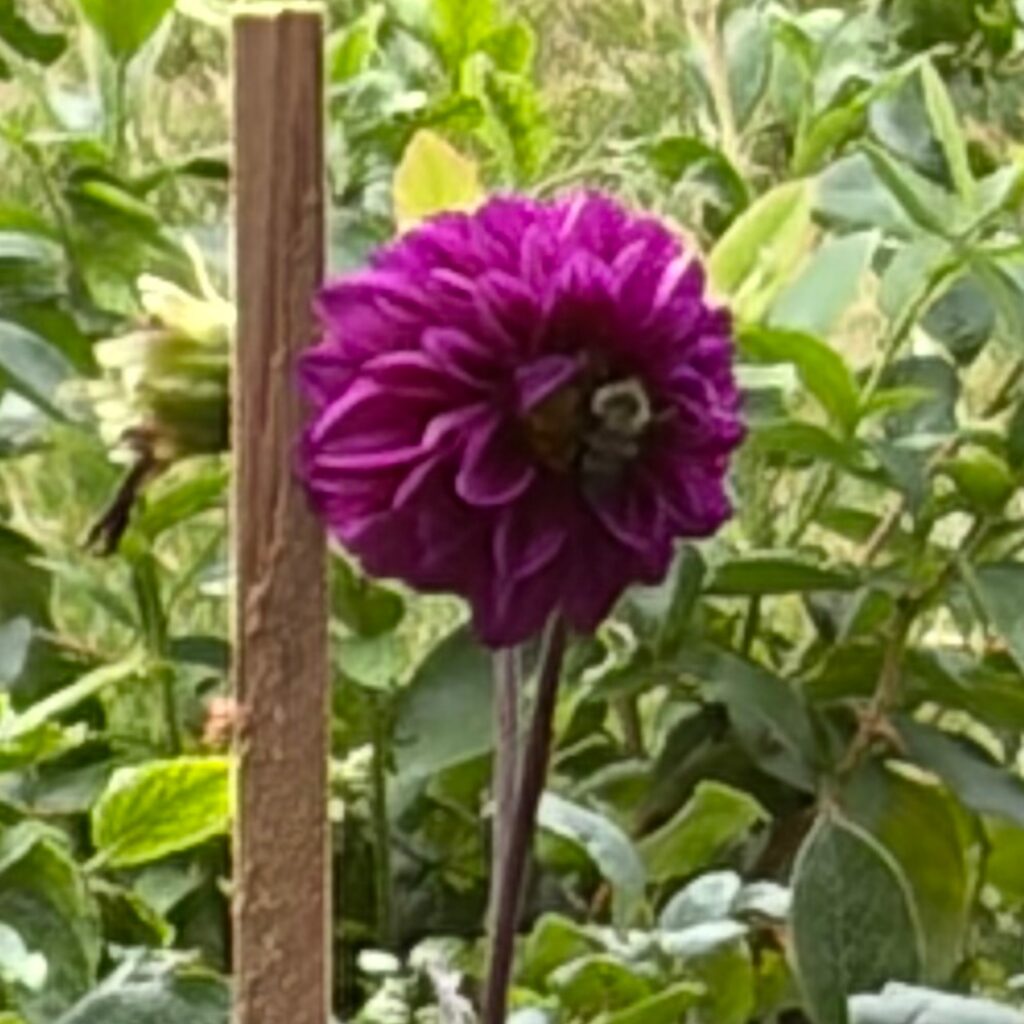
    I snapped this shot in the backyard recently for no particular purpose. I didn’t realize there were two bees inside the dahlia flower. One is quite visible; the second is almost hidden by the first bee and the flower petals.

    Our backyard is popular with the bees. Usually, I see bumblebees like these, and occasionally a honeybee. There are also plenty of solitary bees. There are more than 50 bee species that live in BC, most of which are quite small, and I just don’t notice them.

    I might be related to Winnie the Pooh because when I see bees, I think of honey. Bumble bees don’t make honey the way honeybees do. They make far less, not enough to be harvestable; still, in my mind, a bee equals honey.

    Thinking of honey brought to mind a scripture passage.

    Oh how I love your law!

    It is my meditation all the day.

    Your commandment makes me wiser than my enemies,

    for it is ever with me.

    I have more understanding than all my teachers,

    for your testimonies are my meditation.

    I understand more than the aged,

    for I keep your precepts.

    I hold back my feet from every evil way,

    in order to keep your word.

    I do not turn aside from your rules,

    for you have taught me.

    How sweet are your words to my taste,

    sweeter than honey to my mouth!

    Through your precepts I get understanding;

    therefore I hate every false way. Psalm 119:97-104 ESV

    Psalm 119 is devoted to praising the Law of God, its beauty and usefulness. 

    It’s an alphabetical acrostic poem, with its 176 verses grouped into 8 verse sections. The first letter (in Hebrew) of each section begins with a consecutive letter of the Hebrew alphabet: aleph, beth and so on. It’s a marvel of literary construction. It’s not the only alphabetic acrostic in the Psalms but is certainly the largest,

    More importantly, though, is its deep, resonant theme of the goodness of God and His Word. I wonder if we have the same appreciation for the Scriptures that the Psalmist did.

    I love reading the Word, but I confess I don’t always think of it as sweeter than honey. I can often find other things to read or fill my time with instead of the Scriptures.

    When I do read it, I sometimes neglect to consider it as a whole. It was written over 1500 years, on three continents in 3 languages (Hebrew, Aramaic, Greek) by about 40 authors. Yet it presents an incredibly cohesive story.

    It’s a book that has survived many efforts to eradicate it and still remains the best-selling book in the world today. That doesn’t include the number of Bibles available as apps or online. It’s a trend that shows no sign of ending. In fact, in the US, the number of Bibles sold in 2025 doubled the sales of 2018. 

    Are you reading yours? Is it sweeter than honey? Are you applying what you read?

    Read the Word. Read the Word. Read the Word.

    Kevin

    SUMMARY

    Two bees hid in a backyard dahlia and got me thinking about honey and Psalm 119. It left me asking if I treasure God’s word as sweeter than honey, or just fill my time elsewhere.

    TAKEAWAY

    Is God’s word sweeter than honey to you, or do you turn to other things instead?

    Remember the Bible is one story, not scattered pieces, even though it took 1,500 years and about 40 authors to write.

    Are you reading your Bible? Are you applying what you read?

    #Dahlia #Bumblebee #ScriptureOfTheDay #BackyardGarden
    You might also enjoy

    Read the Word

    Celebrate your identity in Christ

    Nobody told the bees

    Bumblebees and the sweetness of the Word

  • Gold, treasure hunting and the kingdom of heaven

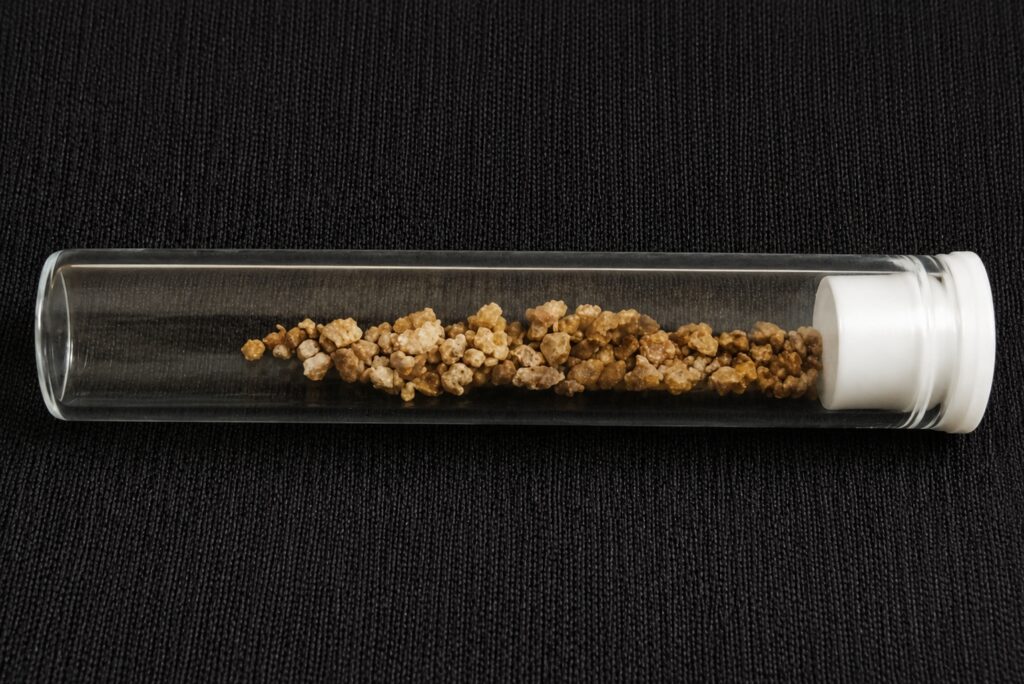
    A vial of Nova Scotia gold

    The little vial in the photograph contains raw gold. It was mined in a small private mine in Nova Scotia. Nova Scotia gold is prized as some of Canada’s finest because of its warm, buttery color.

    I’ve always been attracted to bright shiny things. My mother used to tease me that I must be related to crows and ravens because they too are fascinated by shiny things.

    I’ve panned for gold and hunted for many other forms of treasure. I love semi-precious gems or even simply interesting-looking rocks and stones. I hate to leave a pretty rock behind.

    I’ve found dinosaur bones and fossils. I have stumbled across the occasional arrowhead and other artifacts. Old bottles and bits of metal have caught my eye.

    I have a small piece of driftwood that is actually a root. It is different because a rock is entangled in the root, and the root grew around it. It has no value other than to me, but it sparks my curiosity. 

    Old, rare, leather-bound books seem to call to me. I have this desire to collect and curate them for future generations.

    I love thrift stores, garage sales and auctions. Even if I don’t find something to buy I enjoy the thrill of the “treasure hunt”.

    Yet, as much as I appreciate such things, I know that their value is transitory. I don’t know that the streets of heaven are literally made of gold or the walls of precious stones, but the Bible uses that imagery. Certainly, the value of things will be inverted in glory.

    In this world people value things and use people. There we will use thing and value people. I know that saying is a bit cliché, but it holds truth nonetheless.

    At least two of Jesus’ metaphors about the kingdom speak of treasure seekers of sorts. Especially people who prize the earthly value of treasures.

    “The kingdom of heaven is like treasure hidden in a field, which a man found and covered up. Then in his joy he goes and sells all that he has and buys that field.”

    “Again, the kingdom of heaven is like a merchant in search of fine pearls, who, on finding one pearl of great value, went and sold all that he had and bought it.” Matthew 13:44-45 NIV

    As much as they understood the value of earthly treasure, these men understood that the kingdom was of more infinite worth. It was worth everything they had.

    Jesus said,

    “Do not store up for yourselves treasures on earth, where moths and vermin destroy, and where thieves break in and steal. But store up for yourselves treasures in heaven, where moths and vermin do not destroy, and where thieves do not break in and steal. For where your treasure is, there your heart will be also. Matthew 6:19-21 NIV

    There isn’t anything new to us in these words. If we have been in church for any length of time, we can probably quote them and understand their context and meaning.

    Still, we are like sheep, easily distracted. Something shiny comes along and distracts us, and suddenly we have veered off course and are chasing the treasure of this world.

    There is no harm in owning some of the treasure unless they really own us. When we seek them to the exclusion of God, or we worry more about them than the things of God, we have a problem.

    Now, the earthly things that I consider treasures may hold no value whatsoever in your eyes. Still, we all need to examine our hearts to see what we place ahead of God. What treasures have become idols in our lives?

    Kevin

    SUMMARY

    A vial of raw Nova Scotia gold got me thinking about my lifelong love of collecting treasures, from rocks to rare books. Jesus reminded me that the kingdom of heaven is treasure worth far more than anything we could ever dig up or collect.

    TAKEAWAY

    However precious, earthly treasures are only temporary. The kingdom of heaven is worth infinitely more than anything you could ever collect or own. 

    Loving beautiful or interesting things isn’t wrong in itself, but it becomes a problem when you value those things more than you value God. 

    Take time to examine your heart and ask what treasures may have quietly become idols competing with God for first place in your life.

    Celebrate your identity in Christ

    Is it right living or right belief?

    Our earthly treasures

    Flakes of mica

    Gold, treasure hunting and the kingdom