
Tag: Bible study

  • Carpenter or Tekton? Seeing the World of Jesus More Clearly

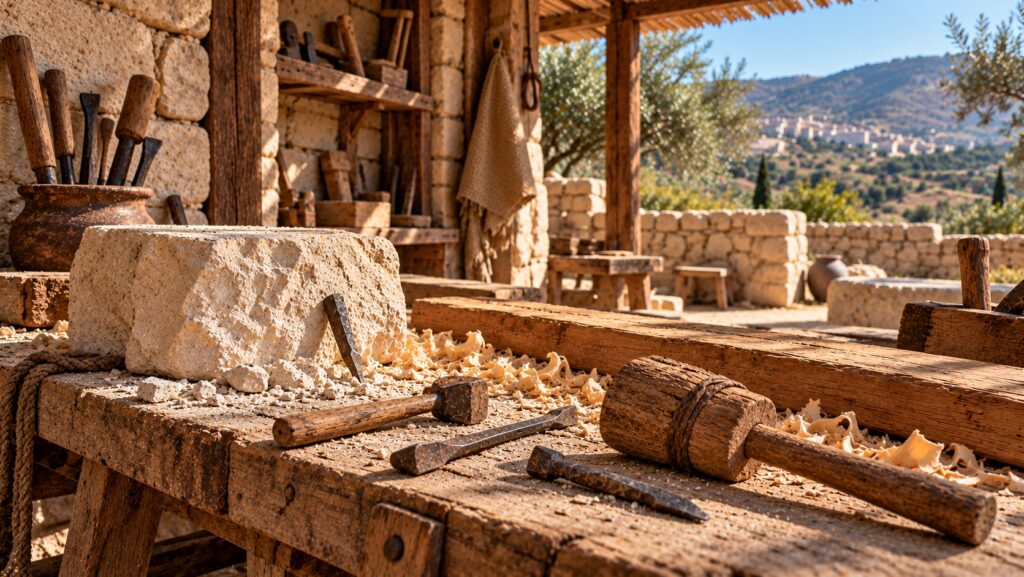
    A carpenter’s workbench in an open-air stone workshop with a rough limestone block, chisels, a wooden mallet and wood shavings, with olive trees and sunlit hills beyond.

    Recently, I wrote about the need to read Scripture for ourselves and dig deeply. We have tools at our ready disposal, the envy of any seminary in history. We have the Bible in an almost overwhelming variety of translations.

    We have commentaries ranging from near the time of Christ to the latest in academic thought. We have study tools to help us understand the original language, and if we prefer, we have the Scriptures in their original forms. Maps, charts and works of history, archaeology and science aid our study. There are concordances and Bible dictionaries available for our use. We have photos and videos of the places of the Bible to help us envision them.

    The deeper we dig, the more we learn and appreciate the wondrous Word God has given us. The more we can understand Him. As we seek answers to our questions, we find we may not have all the answers, but we certainly get better questions. If nothing else, we put together a fuller, more accurate picture.

    Allow me a small example. We all know that Jesus was a carpenter.

    Is not this the carpenter, the son of Mary and brother of James and Joses and Judas and Simon? And are not his sisters here with us?” And they took offense at him. Mark 6:3 ESV

    Is not this the carpenter’s son? Is not his mother called Mary? And are not his brothers James and Joseph and Simon and Judas? Matthew 13:55 ESV

    The word translated “carpenter” is the Greek “tekton.” It means craftsman or builder. Jesus likely worked with wood, but since stone is more common in that part of the world, he also probably worked with stone as well.

    The fact that Jesus was likely more than simply a carpenter doesn’t change who He was or what He did on our behalf, but it does change our image of what He did and the world He lived and worked in. 

    There is nothing wrong with being a carpenter; it was and remains a much-needed trade today. Knowing He was a tekton – a builder, a craftsman – just gives us a clearer picture. Either way, he was a skilled craftsman who worked with His hands. He knew the cost and value of a hard day’s work. He was human in every way.

    In the end, that minor difference in wording may change nothing, but it helps me see the world of the One I love more clearly, and that’s a blessing.

    Read the Word. Take advantage of the plethora of tools to help you dig deeper. Get to know Him more clearly.

    Be blessed

    Kevin

    SUMMARY

    Digging into one small word, tekton, gave me a clearer picture of the world Jesus lived and worked in. Read the Word, dig deeper, and get to know Him more clearly.

    TAKEAWAY

    We have more tools for studying the Bible than ever before, including translations, commentaries, maps and concordances. We should use them.

    The deeper we dig, the more we learn. We may not get all the answers, but we get better questions and a fuller picture.

    Jesus was a tekton, a craftsman or builder who likely worked with stone as well as wood. That doesn’t change who He was, but it gives us a clearer picture of His world.
    CHECK OUT THESE POSTS

    Read the Word. Read the Word

    The good news of the gospel

    Your local church needs you

    Blown by the wind? Read the Word.

    Hobby horse alert – read the Word

  • I thirst

    The maker of water had none

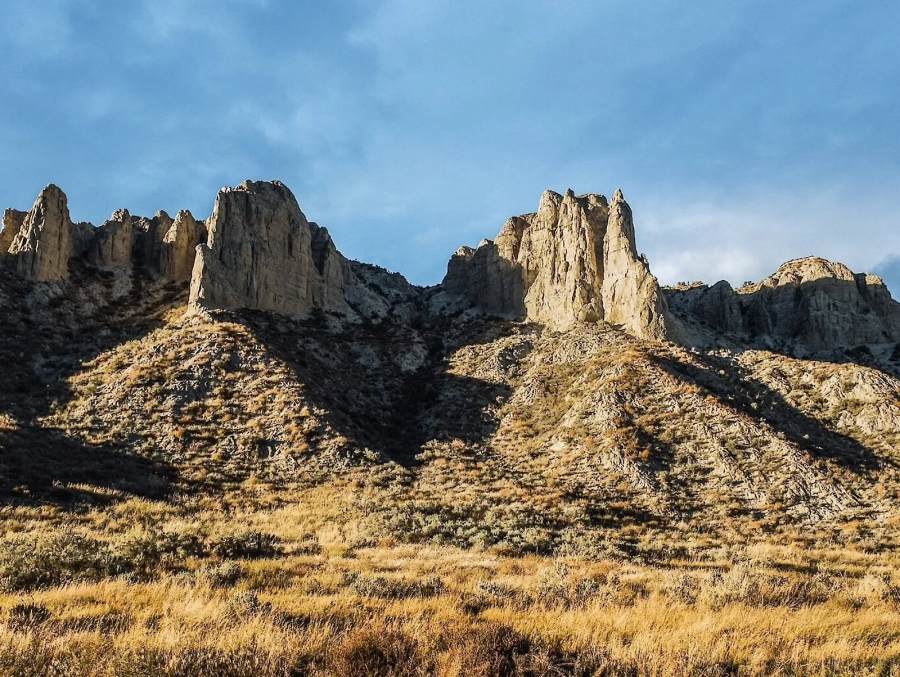
    Rocky cliffs and spires rising above a sunlit, grassy hillside under a cloudy blue sky. McAbee fossil beds, Cache Creek, BC

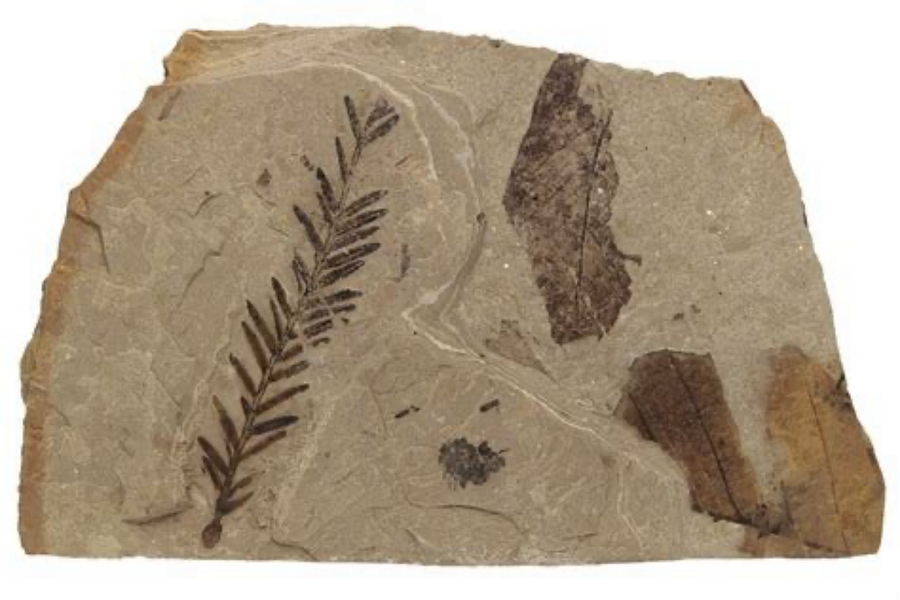
    Years ago, I visited the McAbee Fossil Beds for a fossil dig. The beds used to be open to the public for supervised digs.  The beds lie high atop a ridge in desert-like conditions, in what was an ancient lakebed, near Cache Creek, BC. It was in the heat of the summer. I walked up the long trail from the valley floor, dug for a couple of hours, and came down laden with fish and plant fossils. I hadn’t taken enough water, and by the time I reached where Kathy and the dog were resting comfortably in the shade, I was parched. I was so thirsty it felt like I hadn’t had a drink of water in days. That cold bottle of water was so good.

    A slab of tan stone holding dark fossil impressions of a fern-like sprig, two broad leaves, and part of a third leaf. From McAbee Fossil Beds Cache CRrek BC

    Thirst is one of those sensations the body is designed to pay attention to. Sufficient water is vital to our health in every way. Looking at a picture of the beds recently, I recalled that thirst, and it brought to mind a familiar Bible Passage.

    Jesus has been crucified, and John is recounting the last painful moments of our Lord on the cross.

    After this, Jesus, knowing that all was now finished, said (to fulfill the Scripture), “I thirst.” A jar full of sour wine stood there, so they put a sponge full of the sour wine on a hyssop branch and held it to his mouth. When Jesus had received the sour wine, he said, “It is finished,” and he bowed his head and gave up his spirit. John 19:28-20 ESV

    John says this was to fulfill Scripture. Most will turn to the Psalms to see the prophecy.

    They gave me poison for food, and for my thirst they gave me sour wine to drink. Psalm 69:2 1 ESV

    John also hints at something else. The Romans gave him a drink on a hyssop branch. During the first Passover, they painted the lintels with blood using hyssop to appeal for protection (see Exodus 12:22).

    The man who was thirsty made every bit of water that ever existed, yet He had none on the day He died for us. He made it possible for us to thirst no more. Jesus told the woman at the well… 

    “…everyone who drinks of this water will be thirsty again, but whoever drinks of the water that I will give him will never be thirsty again. The water that I will give him will become in him a spring of water welling up to eternal life.” John 4:14-24 ESV

    The next time you are thirsty, pause to remember the one who died to give us the living water.

    Praise His name

    Kevin

    SUMMARY

    On the cross, the One who made all water cried, “I thirst,” so we could thirst no more. The next time you are thirsty, pause to remember the One who died to give us living water.

    TAKEAWAY

    When Jesus said “I thirst,” He fulfilled Scripture. The hyssop branch that carried the sour wine points back to the hyssop used to paint the Passover blood.

    The One who made every bit of water that ever existed had none on the day He died for us.

    Whoever drinks the water Jesus gives will never be thirsty again. Let your next thirst remind you of Him.

    YOU MIGHT ALSO CONSIDER

    The good news of the gospel

    Know the truth… read the Word

    Everyone knows the truth even if they deny it

    Waterfalls like streams of living water