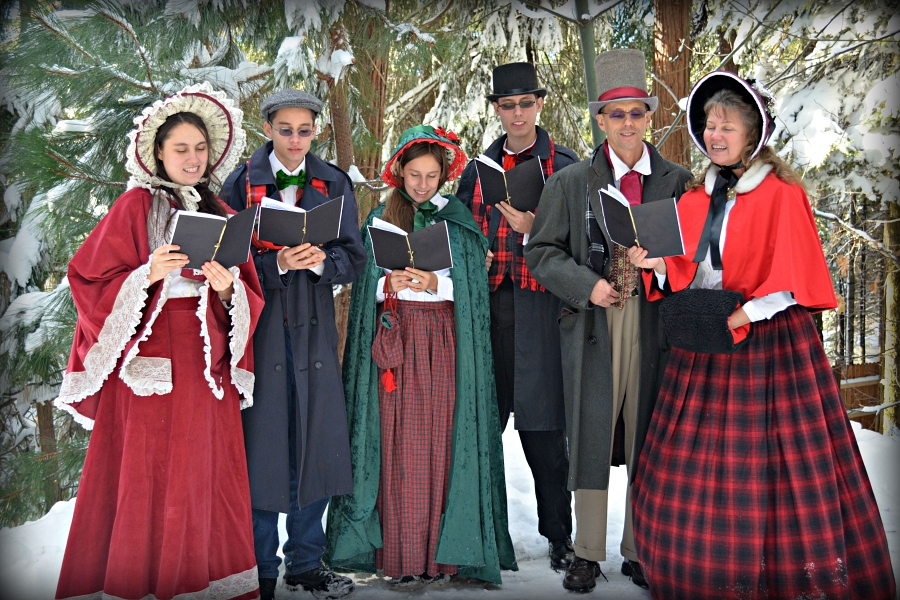
Last night, our community group discussed preferences for Christmas songs. It wasn’t on our agenda; it just happened in casual conversation.
People have decided opinions about what types of songs are appropriate and when they should be played.
I’m partial to songs like “Six White Boomers,””Grandma Got Run Over by a Reindeer,” “All I Want for Christmas is My Two Front Teeth,” or “I Want a Hippopotamus for Christmas.” Other people, not so much so. I enjoy the faith songs as well,
Some people love almost any type of Christmas song, while others love only those based on Scripture. Our youngest son starts playing Christmas music as soon as the services are finished on Remembrance Day (November 11), but others feel it is inappropriate to begin until after December 1st. I know a man who believes there should be no Christmas music until December 15th.
That conversation got me thinking. What is a carol anyway? What differentiates a carol from some other type of song?
One writer says, “Carols, it seems, are as hard to define as they are fun to sing. We usually think of them as “religious” songs, but some medieval carols are amorous, humorous, satirical, political, or convivial. We also think of them as “popular” songs, but not in the same sense that folk songs are popular.”
One source says this, “sometimes accompanied by a dance. A caroller (or caroler) is someone who sings carols, and is said to be carolling (or caroling).
Today, the carol is represented almost exclusively by the Advent carol, the Christmas Carol, and to a lesser extent by the Easter carol; however, despite their present association with religion, this has not always been the case.”
Another source adds this clarification, “In the Middle Ages, the one indispensable element of a carol was its literary structure: the carols had uniform stanzas and a “burden,” that is, a refrain sung at the beginning of each song as well as after each stanza. A familiar example of a song with a burden is “All Things Bright and Beautiful.”
Most of the Christmas music we hear on the radio can rightly be called a carol, whether we like the content or not.
Some of our faith-based Christmas songs can contain errors or debatable information.
“We Three Kings” is a perennial favorite, but the Bible doesn’t tell us how many magi there were or that they were kings.
“The Friendly Beasts” sings of the contributions of the donkey, cow, sheep, and dove. Yet the Bible is silent on what animals (if any) were at the manger.
“Little Donkey,” sings of the donkey carrying Mary to Bethlehem. It’s possible Mary rode one, but the Scriptures are silent.
The ever-popular “Angels We Have Heard on High” regales us with the idea that on the first Christmas night, angels sang praises to God. The phrase Gloria, in Excelsis Deo,” is Latin for Glory to God in the highest” and comes from the first words spoken by the angels to the shepherds.
And in the same region there were shepherds out in the field, keeping watch over their flock by night. And an angel of the Lord appeared to them, and the glory of the Lord shone around them, and they were filled with great fear. And the angel said to them, “Fear not, for behold, I bring you good news of great joy that will be for all the people. For unto you is born this day in the city of David a Savior, who is Christ the Lord. And this will be a sign for you: you will find a baby wrapped in swaddling cloths and lying in a manger.” And suddenly there was with the angel a multitude of the heavenly host praising God and saying, “Glory to God in the highest, and on earth peace among those with whom he is pleased!”When the angels went away from them into heaven, the shepherds said to one another, “Let us go over to Bethlehem and see this thing that has happened, which the Lord has made known to us.” Luke 2:8-15
The song captures the message, but the Scriptures say nothing about angels singing.
What’s my point this morning? I guess it’s simply to enjoy the songs you like and give grace to others who want something else. That sounds suspiciously like loving our neighbors.
Be blessed
Hallelu Yah / Praise God