Wheat field Banner

Tag: ephesians

  • Faith and Works: Resting in the Balance God Designed 

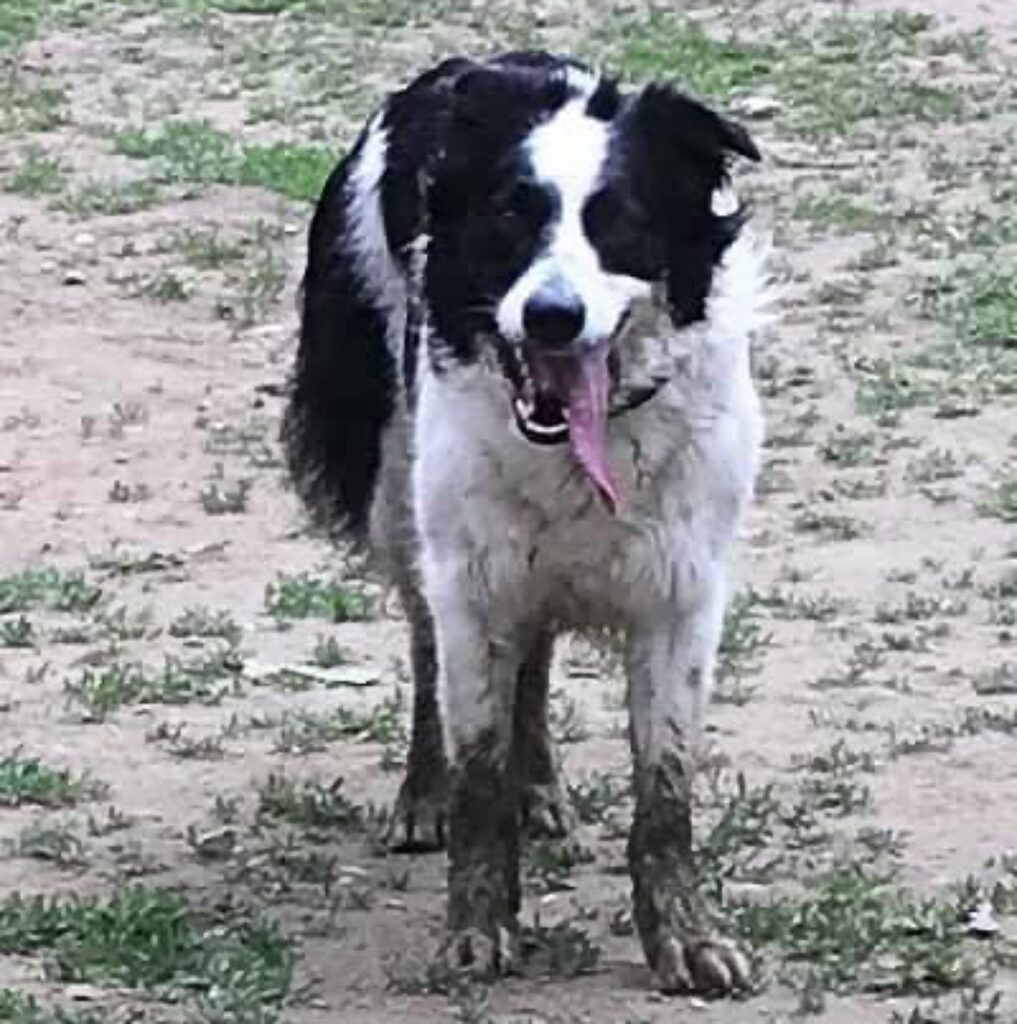
    Border collies don't understand faith or rest - but they sure work hard

    There is a weird tension in Christianity between faith and works. The bible is abundantly clear that we are saved by faith

    For by grace you have been saved through faith, and this not of yourselves, it is the gift of God; not of works, so that no one may boast. For we are His workmanship, created in Christ Jesus for good works, which God prepared beforehand so that we would walk in them. Ephesians 2:8-10

    At the same time, there is clearly a tie between grace and works.

    What use is it, my brothers, if someone says he has faith but he has no works? Can that faith save him? If a brother or sister is without clothing and in need of daily food, and one of you says to them, “Go in peace, be warmed and be filled,” and yet you do not give them what is necessary for their body, what use is that? Even so faith, if it has no works, is dead by itself. James 2:14-16

    We find ourselves dithering like an anxious border collie with no sheep to guard. We settle into grace for a moment, but never quite relax. We fall into works mode for a time in the vain hope that it will please God more somehow, if we earn our salvation. We know something should be happening; we were designed to work, but we’re not sure how.

    We go back and forth, seldom settling into a healthy balance.

    Our works are done out of faith, not to give us faith. Our self-motivated works are bound to fail and are, in fact, sin. This text from Paul to the church in Rome is in the context of eating certain foods, but it illustrates a principle.

    The faith which you have, have as your own conviction before God. Blessed is he who does not judge himself in what he approves. But he who doubts is condemned if he eats, because his eating is not from faith; and whatever is not from faith is sin. Romans 14:22-23

    The first step is to prioritize our relationship with Jesus. We seek first His kingdom and His righteousness (Matthew 6:33). 

    We remember to rest and make time for the Sabbath. (Exodus 20:8-10).

    Consider that all we do is working for the Lord (Colossians 3:23-24).

    Our good works flow out of our relationship with the Lord; they don’t cause it. He saved us without works on our part, and He holds us in relationship.

    Prioritize that relationship, let the rest flow naturally. Sometimes we need to reset, but that always comes by time with Him.

    Rest comfortably in the Lord, my dear friends.

    Be blessed 

    Kevin 

    If salvation is by faith, “Why good works?”


    SUMMARY


    The tension between faith and works often leaves Christians oscillating between striving and resting, never fully settling in either. The key is to prioritize our relationship with Jesus — good works flow naturally out of that relationship, not the other way around.

    TAKEAWAYS

    We are saved by grace through faith alone, yet genuine faith produces good works

    Self-motivated works done apart from faith are sin; works must flow from our walk with Christ

    The solution is to seek first His kingdom, rest in Him, and let the works follow naturally

    Right Belief and Right Living are both important

    Who (or what) is the rock upon which we stand?

  • Knowing the Bible like the back of my hand

    Knowing the Bible like the back of my hand

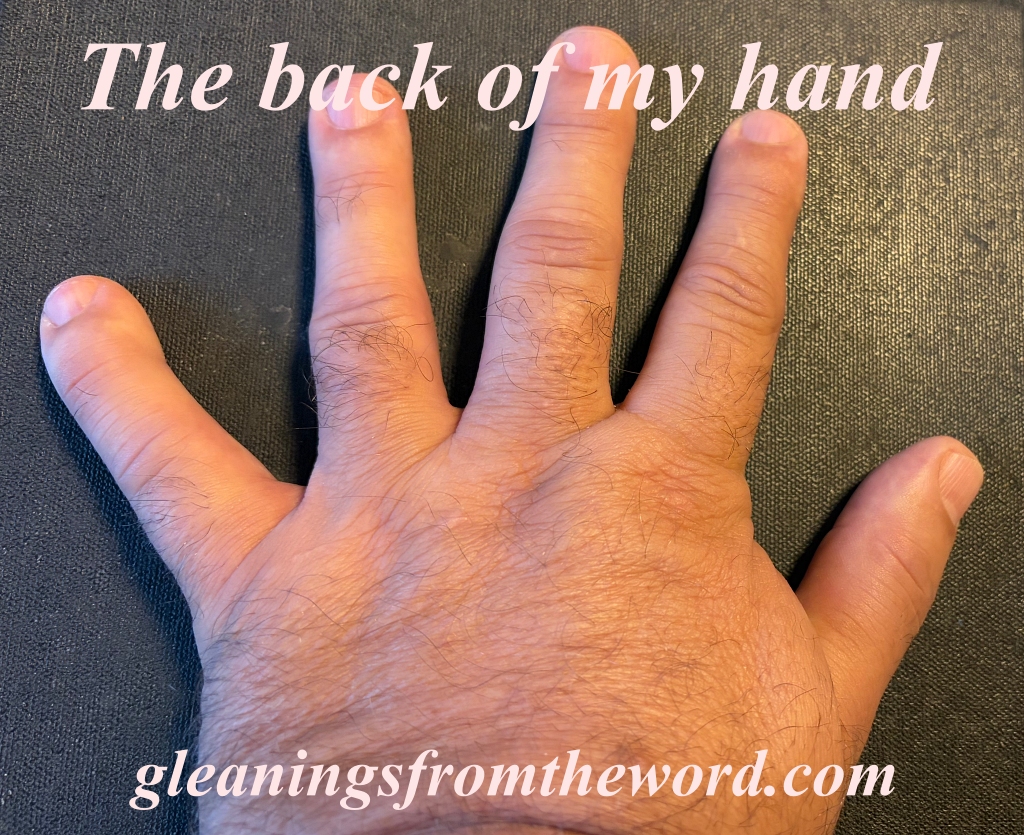
    Knowing the bible like the back of your hand

    If I said to you that I know something like the back of my hand, you would understand what I meant. It’s an English language idiom that means “to have very good and detailed knowledge of something.”

    If someone said to you, “I know the bible like the back of my hand,” you would understand them to mean a deep understanding of the Scriptures, likely with large portions memorized, a more-than-average understanding of the various books, their contexts and how they come together. Honestly, it’s a pretty bold claim.

    While the Bible doesn’t use that idiom, it could be said of the Pharisees and teachers of the Law in Jesus day. They knew what we call the Old Testament backward and forward and could likely recite at least the first five books word for word. They also understood all the rabbinical interpretations and applications. I would love to have their knowledge.

    The man we come to know as Paul the Apostle was once known as Saul of Tarsus, a Pharisee of Pharisees. He was highly regarded as a zealot, a teacher and a persecutor of the Christian faith. He stood by and held Stephen’s cloak as Stephen was being stoned to death for his beliefs. No one doubted his sincerity, his knowledge or his passion.

    Despite all that, Saul was missing something. He didn’t yet know Jesus. That would come later in a divine encounter on the Damascus Road.

    Without Christ, all his knowledge, his years of study, the sincerity of his beliefs and his zeal were meaningless. He was doomed to eternal damnation.

    In Acts, Paul says; I am a Jew, born in Tarsus of Cilicia, but having been brought up in this city, having been instructed at the feet of Gamaliel according to the strictness of the law of our fathers, being zealous for God just as you all are today. Acts 2:3

    Throughout Paul’s writings, we see that he came to understand that Jesus was the promised Messiah and that we are saved by faith through God’s grace and mercy, bought by the shed blood of Jesus.

    For by grace you have been saved through faith, and this not of yourselves, it is the gift of God; not of works, so that no one may boast. Ephesians 2:8-9

    Paul also teaches that we need to know the Word, to understand what it teaches and apply it to our lives. To be a Christian takes faith, but that doesn’t exclude knowledge.

    All the “head knowledge” in the world, even if you can say you know the Bible, church history and theology like “the back of my hand”, without that moving to your heart and manifesting as faith, it’s useless.

    Faith isn’t a blind leap. You have to have enough knowledge to know you are a sinner and what you need to be reconciled to God. Our walk isn’t a question of faith versus knowledge. It’s faith and knowledge. 

    Faith saves you, and the knowledge and its application deepen your relationship. With Christ. The way to reconciliation with God

    I pray you have the faith to be saved, and the head knowledge to understand. I pray that your love for Jesus and knowledge of what He requires move you to application (works)

    Hallelu Yah (Praise God) 

    Be blessed 

    Kevin 

    Soli Deo Gloria (For the glory of God alone) 


    SUMMARY

    Knowing Scripture deeply is admirable, but even the most profound biblical knowledge is worthless without personal faith in Jesus Christ. True Christian living requires both — faith that saves and knowledge that deepens the relationship.

    KEY POINTS

    Saul of Tarsus had unmatched scriptural knowledge yet was lost without Christ, proving that head knowledge alone cannot save. 

     Salvation comes by grace through faith — not works or intellectual achievement — as Paul himself came to understand after his Damascus Road encounter. 

     Faith and knowledge are not opposites; faith saves us, while growing in the Word deepens our walk with Christ and moves us toward application.

    Enjoyed this? Want daily devotionals? Subscribe today 


    All contents, “Gleanings From the Word” and “Experience an Extraordinary God in Ordinary Life,” are © 2001, 2026 K.F. “Kevin” Corbin, “Gleanings From the Word.” All rights reserved.

    Scripture quotations are from the Legacy Standard Bible® (LSB®), Copyright © 2021 by The Lockman Foundation. Used by permission. All rights reserved. Managed in partnership with Three Sixteen Publishing Inc. 

    From Gleanings From The Word (Kevin Corbin, 2001– ), a Scripture-based devotional work.


    You might also like “Read the Word” and “Purpose in the Process”