
Patron Saints, Luck, and Guardian Angels: What Are You Worshiping?
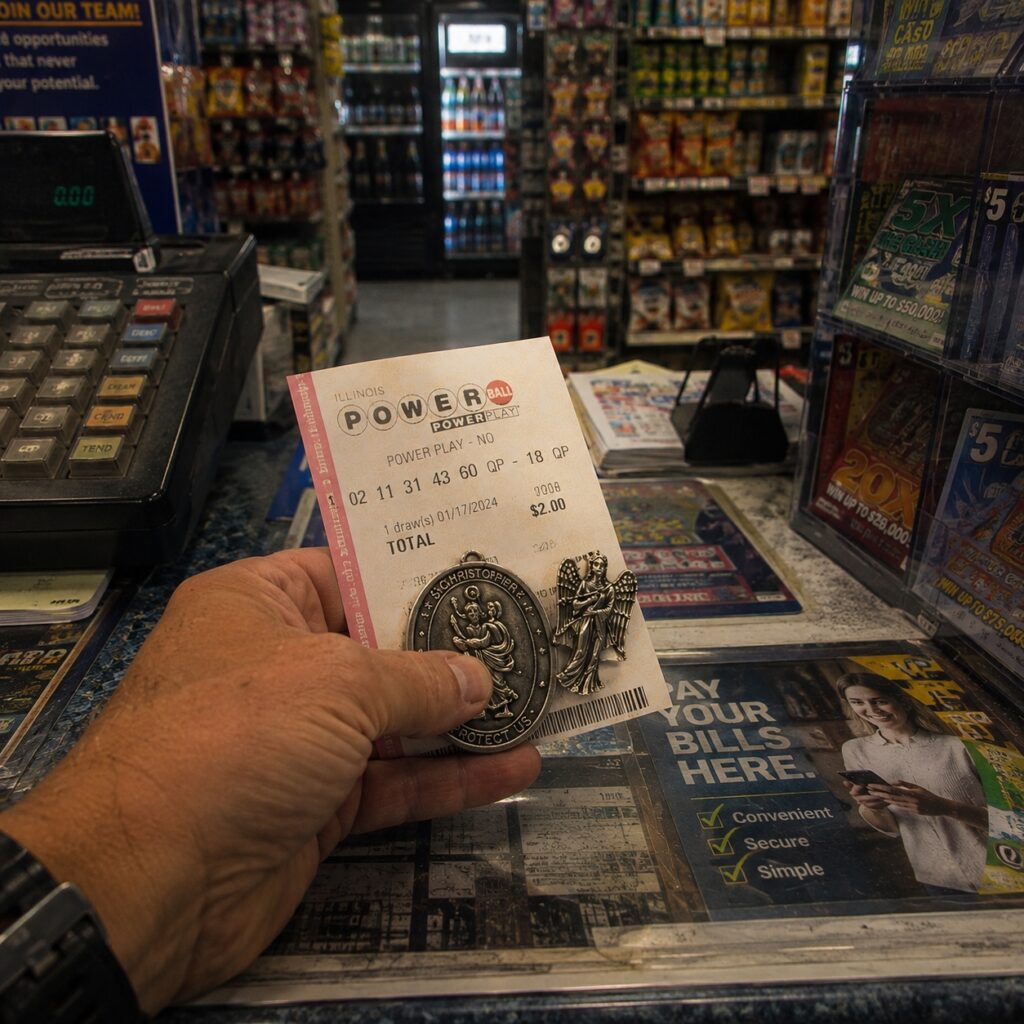
Without ever knowing it, she managed to push several of my hot buttons at once. I stood behind her at the convenience store checkout. As her purchases were being rung in, she kissed her patron saint medal and rubbed her guardian angel pin. She said to the cashier, “For luck!” Then she ordered her lottery ticket.
I’m not a fan of lotteries and regard them as a tax on the greedy and poor. I’ve seen many families and lives ruined by gambling, including by “harmless” lottery playing. However, there is no biblical prohibition on gambling, so I recognize that as being my issue.
I don’t believe in “luck”. I believe in a sovereign God who is ultimately in control of all things. There is such a thing as divine providence and blessing, but not luck. Again, my issue.
Patron Saints! Now that’s a problem. It’s a man-made system of idolatry. The saints are all who believe in Jesus Christ, not a select class voted on by denominational elite. Every reference in the Bible to saints (68 of them) refers to the body of believers. In every instance but one, the word is plural, not singular, referring to more than one person. Praying to patron saints is a direct affront to God.
“You shall have no other gods before me. You shall not make for yourself a carved image, or any likeness of anything that is in heaven above, or that is in the earth beneath, or that is in the water under the earth. You shall not bow down to them or serve them, for I the Lord your God am a jealous God, visiting the iniquity of the fathers on the children to the third and fourth generation of those who hate me, but showing steadfast love to thousands of those who love me and keep my commandments.
Exodus 20:3-6 ESV
Guardian angels? The jury is still out on the whole concept of guardian angels. You can’t prove or disprove their existence from Scripture. In any event, God is sovereign over everything, so he doesn’t need an angel to intercede for us. If they exist, their role isn’t to be worshipped or to tend to our whims. Angels are under the sovereign command of God. Certainly, their role isn’t to make us “lucky”.
Over the past number of years, the public at large has developed a huge and unhealthy fascination with angels. There are people who track “angel sightings”. You can buy prosperity angels, good luck angels, fertility angels and more. You can go to see New Age practitioners who will give you angel readings and special messages for you from your personal angel.
Most of it is promoted by people just out to make a buck and the odd fraud artist. I don’t doubt that some of those things are from angels. Fallen angels. Evil spirits and demons.
The fascination with angels has become a form of worship.
For although they knew God, they did not honor him as God or give thanks to him, but they became futile in their thinking, and their foolish hearts were darkened. Claiming to be wise, they became fools, and exchanged the glory of the immortal God for images resembling mortal man and birds and animals and creeping things. Therefore God gave them up in the lusts of their hearts to impurity, to the dishonoring of their bodies among themselves, because they exchanged the truth about God for a lie and worshiped and served the creature rather than the Creator, who is blessed forever! Amen. Romans 1:21-25 ESV
What are you worshipping? God alone is worthy of our worship.
Until next time, praise God for His love and His patience with us.
May God pour out His abundant blessings on you,
Kevin
SUMMARY
A woman ahead of me at checkout kissed her patron saint medal, rubbed her guardian angel pin, and bought a lottery ticket “for luck.” It sent me back to Scripture on luck, patron saints, and guardian angels, and to the real question underneath it all: what are we worshiping?
TAKEAWAY
Luck and gambling aren’t biblically prohibited, but Scripture points to a sovereign God who governs through providence, not chance
“Saints” appears 68 times in Scripture, almost always plural, always describing the whole body of believers, never a select class chosen by denominational vote — making patron saint devotion a man-made system
Guardian angels can’t be confirmed or denied from Scripture, but if they exist, they serve under God’s command, not ours; today’s cultural fascination with angels has drifted into a form of idolatry
YOU MIGHT CHECK THESE OUT
Bible Gateway – a free online bible, easily searchable in many translations
Got Questions – a great source for quick answers on a wide range of Christian/Bible questions
YOU MIGHT ALSO LIKE
Why no one can say they didn’t know the truth
How do you know what the Bible says? You read the Word