Category: John

  • Seven Sayings of Christ on the Cross

    Introduction to a devotional series

    "Crucifixion"  by Giovanni Battista Tiepolo, Italian painter (1696–1770)

    A devotional series

    There is a topic I was introduced to early in my Christian walk that I have returned to meditating on again and again … I think I even did a series on it back in the early days of Gleanings, although it has long since disappeared after the backup hard drive was lost. That topic is “The Seven Sayings of Christ on the Cross”.

    There are seven words, or sayings, that were recorded as being said by Jesus while on the cross. Each of them is profound, although we typically skip over them. They have occupied the mind of many a theologian and pastor, and numerous books have been written on them.

    I don’t think we will reach book length, but we will take the time to examine them in some detail.  Each part will be illustrated by a classic art piece on the crucifixion. Today we have “Crucifixion” by Giovanni Battista Tiepolo, Italian painter (1696–1770)

    Some things to consider about Jesus’ death before we dig in. 

    Jesus was a man, and His death was fully natural.  He died a physical human death, albeit a painful one. He was whipped, beaten, tortured and nailed to a cross. He most likely died of suffocation.

    And being found in human form, he humbled himself by becoming obedient to the point of death, even death on a cross. Philippians 2:8 ESV

    Jesus’ death was totally unnatural. He was holy and sinless. Death had no hold on Him.

    He committed no sin, neither was deceit found in his mouth. 1 Peter 2:22 ESV

    His death was prophesied. While God knows the hour and means of the death of everyone, Jesus’ death, burial and resurrection were made known long before He ever took on flesh.

    they made his grave with the wicked and with a rich man in his death, although he had done no violence, and there was no deceit in his mouthIsaiah 53:9 ESV

    His death was completely supernatural. It was different from any other death, just as His birth was different from any other birth. No one could have taken His life; He chose to lay it down.

    For this reason the Father loves me, because I lay down my life that I may take it up again. No one takes it from me, but I lay it down of my own accord. I have authority to lay it down, and I have authority to take it up again. This charge I have received from my Father.  John 10:17-18 ESV

    His death was accompanied by supernatural phenomena. Darkness covered the land for hours, and an earthquake rocked Jerusalem. The dead were seen risen from their graves. The temple veil was torn in two from the top. As we will see, some of his final words were spoken in specific fulfillment of prophecy.

    The Romans crucified many people, not just Jesus and the two beside Him. No one knows the exact number, but it certainly easily runs into the hundreds of thousands or perhaps even more than a million. In 71 BC, the Romans crucified more than 11,000 slaves after a single rebellion.  

    After the fall of Jerusalem, there is no record of the numbers, but estimates put the number of dead between 600,000 and 1,000,000. Not all were killed by crucifixion, of course, but the roadway was lined with crosses for miles. Josephus, the historian, records 500 people a day being captured and crucified, so many that they ran out of wood for the crosses and places to put them.

    However, many died by crucifixion (and it was practiced by many people groups, not just the Romans); none were accompanied by the supernatural signs that followed Jesus’ death. Certainly, none were followed by the resurrection of the victim

    Our Lord endured the shame of the cross to set us free. In one way, His death was just one amongst perhaps millions on the cross over the ages. Yet it was unique in that the spotless, sin free lamb of God willingly endured it to pay for my sin and yours. He knew it was coming, and the world had been prepared in advance.

    Tomorrow we will begin to look at what He said.

    Until then, rejoice in the Lamb who was slain, the one the grave could not hold.

    Kevin

    SUMMARY

    I introduce a new series on the Seven Sayings of Christ on the Cross, but before we dig into the words themselves, I pause to consider what made His death unlike any other. Though crucifixion claimed countless lives throughout history, only His death was accompanied by prophecy, supernatural signs, and resurrection.

    TAKEAWAY

    Jesus’ death was fully human and physically brutal, yet also fully unique — sinless, prophesied, and given up rather than taken from Him.

    Supernatural signs accompanied His crucifixion (darkness, an earthquake, the torn veil, and the dead rising) that never accompanied any other death by crucifixion, however many there were

    .

    This post sets up a coming series examining each of the seven sayings Jesus spoke from the cross.

    YOU MIGHT ALSO LIKE

    The gospel – the best news you might ever hear

    Know what the Bible teaches – the importance of reading the Word

    Seven Sayings of Christ on the Cross – Part one

    The Kingdom of God grows

  • Jesus: The Fountain of Living Water in Jeremiah and John 

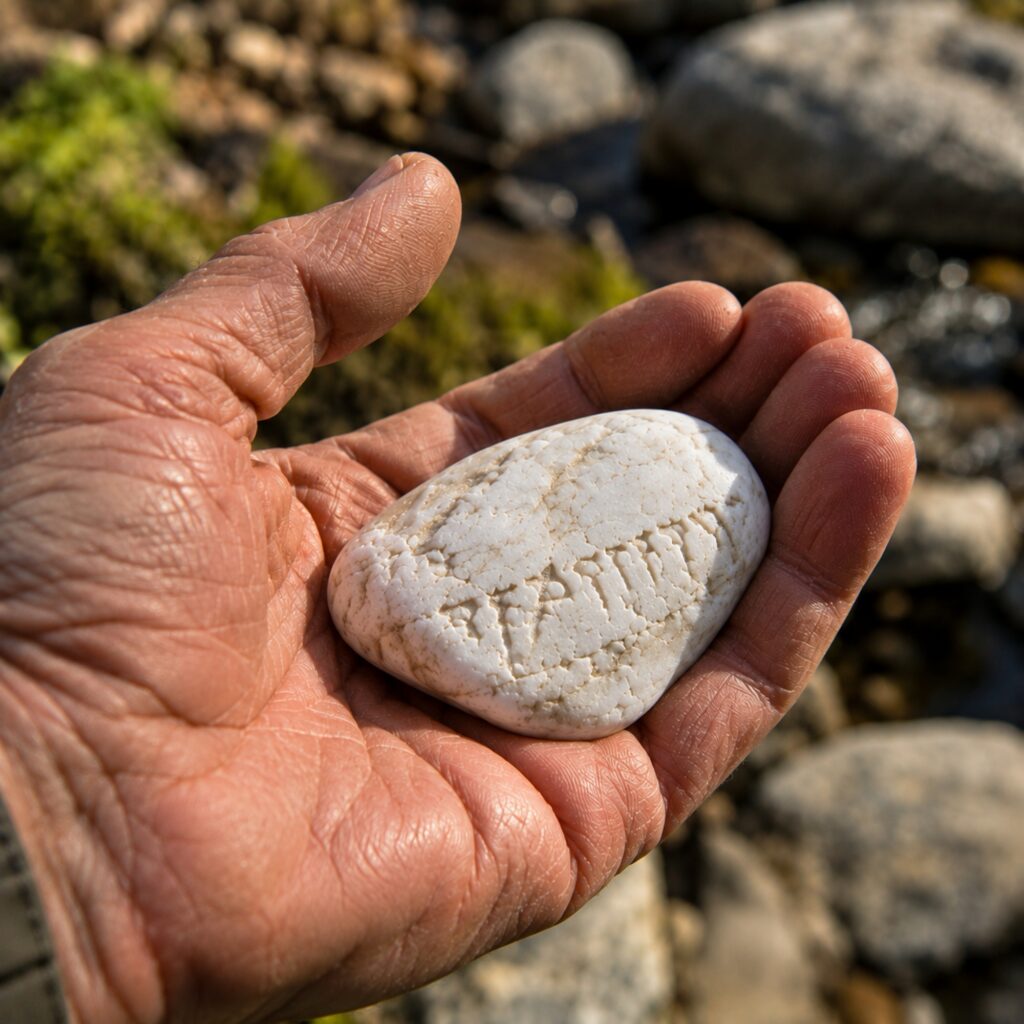
    artists representation of the throne of God

    I was reading in the Old Testament book of Jeremiah yesterday when a pair of verses popped out and reminded me of something in the New Testament. God is confronting Judah’s sin with some serious warnings.

    A glorious throne set on high from the beginning is the place of our sanctuary. O Lord, the hope of Israel, all who forsake you shall be put to shame; those who turn away from you shall be written in the earth, for they have forsaken the Lord, the fountain of living waterJeremiah 12:13-14 ESV

    Those who have turned away are destined not to see His throne. That includes all of us sinners, except for His intervention and the gift of faith to accept Him by grace

    There isn’t a direct connection between the verses other than I see some parallels. Not enough to build a theology on, but enough to ponder.

    In John 7, Jesus makes it clear that He is the Fountain of Living Water. Jesus is our sanctuary.

    On the last day of the feast, the great day, Jesus stood up and cried out, “If anyone thirsts, let him come to me and drink. Whoever believes in me, as the Scripture has said, ‘Out of his heart will flow rivers of living water.’” Now this he said about the Spirit, whom those who believed in him were to receive, for as yet the Spirit had not been given, because Jesus was not yet glorifiedJohn 7:37-39 ESV

    In John 8:1-11, we find the account of the woman caught in adultery. The Pharisees bring her before Jesus to test Him and condemn the woman. The results aren’t what they expect.

    This they said to test him, that they might have some charge to bring against him. Jesus bent down and wrote with his finger on the ground.  And as they continued to ask him, he stood up and said to them, “Let him who is without sin among you be the first to throw a stone at her.” And once more he bent down and wrote on the ground. But when they heard it, they went away one by one, beginning with the older ones, and Jesus was left alone with the woman standing before him. Jesus stood up and said to her, “Woman, where are they? Has no one condemned you?” She said, “No one, Lord.” And Jesus said, “Neither do I condemn you; go, and from now on sin no more.” John 8:6-11 ESV

    We don’t know what Jesus wrote in the dirt, but the parallel to the Jeremiah passage pops out. The self-righteous Pharisees and teachers of the Law are putting Jesus to the test, and He writes in the earth. They are rejecting Jesus, the Fountain of Living Water.

    The warning in Jeremiah was clearly for the people of Judah, yet its overtones carry on to everyone. Without Him, there is no way they will ever see the throne of God. That’s true of all sinners; none of us will see that heavenly throne unless we come to him in faith by grace.

    Heed the warning, and walk with Jesus by faith today.

    May God richly bless you today,

    Kevin

    YOU MIGHT ALSO LIKE

    The gospel, the best news you will ever hear

    Read the Word, read the Word, read the Word.

    Why the Old Testament Still Matters

    Is it by faith or works? Do they both matter?

    SUMMARY

    I was reading in Jeremiah when two verses stopped me and carried my mind straight into John’s gospel. I share how God’s warning to Judah about forsaking the fountain of living water echoes forward into Jesus’s own words and the story of the woman caught in adultery.

    TAKEAWAY

    Jeremiah 12:13-14 warns that those who forsake the Lord, the fountain of living water, will be written in the earth and never see His glorious throne.

    In John 7:37-39, Jesus stands up and declares Himself the fountain of living water, offering the Spirit to all who believe.

    In John 8:1-11, Jesus bends down and writes in the dirt before the woman caught in adultery, an image that echoes Jeremiah’s warning to those who turn away.

    Soli Deo Gloria (For the glory of God alone)