Category: Luke

  • Ruach: Wind, Breath, and the Holy Spirit Who Gives Life

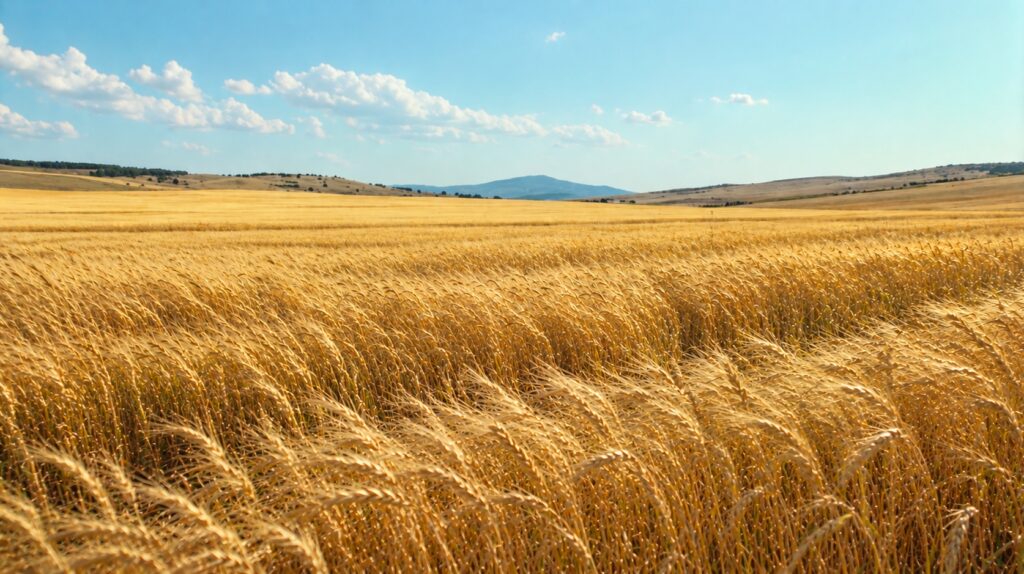
    I watched the wind blow across the countryside through the wheat fields. The waves of wheat reminded me of the ocean. The view changed moment by moment at the wind’s whim.

    The train of thought is too long to explain, but I ended up thinking of wind in the bible. The Hebrew word is ruach, but it means much more than wind.  It also means breath and spirit. One word, three meanings.

    I think the word leaves a fabulous trail through the Scriptures

    We see the spirit, the wind, the breath of God from the very beginning. 

    The earth was without form and void, and darkness was over the face of the deep. And the Spirit of God was hovering over the face of the waters. Genesis 1:2 ESV

    A few verses later, God breaths life into Adam. A different word is used, but it’s still God’s Spirit.

    Fast forward to Ezekiel standing in the valley of dry bones. The Spirit breathes life into the dead bones, and they rise.

    The hand of the Lord was upon me, and he brought me out in the Spirit of the Lord and set me down in the middle of the valley; it was full of bones. And he led me around among them, and behold, there were very many on the surface of the valley, and behold, they were very dry. And he said to me, “Son of man, can these bones live?” And I answered, “O Lord God, you know.” Then he said to me, “Prophesy over these bones, and say to them, O dry bones, hear the word of the Lord. Thus says the Lord God to these bones: Behold, I will cause breath to enter you, and you shall live. And I will lay sinews upon you, and will cause flesh to come upon you, and cover you with skin, and put breath in you, and you shall live, and you shall know that I am the Lord.” So I prophesied as I was commanded. And as I prophesied, there was a sound, and behold, a rattling, and the bones came together, bone to its bone. And I looked, and behold, there were sinews on them, and flesh had come upon them, and skin had covered them. But there was no breath in them. Then he said to me, “Prophesy to the breath; prophesy, son of man, and say to the breath, Thus says the Lord God: Come from the four winds, O breath, and breathe on these slain, that they may live.” So I prophesied as he commanded me, and the breath came into them, and they lived and stood on their feet, an exceedingly great army. Ezekiel 37:1-10 ESV

    Now let’s skip ahead to the New Testament; the wording is Greek now, not Hebrew, but it’s the same Spirit.

    Jesus is speaking… 

    And when he had said this, he breathed on them and said to them, “Receive the Holy Spirit. John 20:22 ESV

    God’s Holy Spirit is the giver of life and rebirth. 

    When you feel as dry and empty as dead bones, remember where life comes from. It’s God who gives life; turn to Him. Breathe Him in again.

    May you be filled with the Spirit today.

    Kevin

    SUMMARY

    Watching wind move through a wheat field sent me tracing ruach, the Hebrew word for wind, breath, and spirit. From Genesis to Ezekiel’s dry bones to John, it shows that God’s Holy Spirit is the giver of life and rebirth.

    TAKEAWAY

    Ruach means wind, breath, and spirit, so the Spirit of God hovering over the waters in Genesis 1:2 is the same breath of God you can trace through all of Scripture.

    In Ezekiel’s valley, the bones had sinews, flesh, and skin, yet no breath was in them until God sent it. The life you need is His to give.

    When you feel as dry and empty as dead bones, remember where life comes from. Turn to God and breathe Him in again, the same Holy Spirit Jesus gave with a breath in John 20:22.

    CONSIDER THESE POSTS

    The gospel – the best news ever.

    Celebrate your identity in Christ

    Sailing – tossed about on the waves

    The Sentinel

  • Famous Final Words

    Don’t be fooled by the title; Gleanings isn’t going anywhere. We plan to be around as long as God calls us to be here. The title comes from the fact that I thought about famous last words the other evening. Some are ironic; others profound.

    American Civil War General John Sedgwick was killed at the Battle of Spotsylvania Courthouse on May 9, 1864, by a long-range shot from a sharpshooter. He is remembered for his final words, “They couldn’t hit an elephant at this distance.

    Peter Abelard, the famous 12th-century philosopher, after a lifetime of study and thought: “I don’t know.” The more we know, the more we learn that we do not know.

    Queen Elizabeth 1: “All my possessions for a moment of time.” A little late to recognize that material goods do not replace other, more valuable things

    Thomas Becket, early chancellor of England, shortly before being murdered by knights of King Henry II: “For the name of Jesus and the protection of the church I am ready to embrace death.” A martyr for the faith.

    Musician Al Jolson: “This is it! I’m going. I’m going.” We all have to go sometimes.

    Author H.G. Wells: “Go away. I’m all right.” He was as wrong about that as he was about Christ.

    French revolutionary George Jacques Danton: “Show my head to the people. It is worth seeing.” George had a colossal ego right until the end.

    Basketball legend “Pistol” Pete Maravich collapsed during a game. His final utterance was: “I feel great.” Perhaps, not so great there, Pete.

    Blues singer Bessie Smith died saying, “I’m going, but I’m going in the name of the Lord.” That is a profound ending.

    Many of the words of Jesus were recorded for us by the authors of Scripture. All the words he spoke are profound and inspired, but His final words on the cross strike a chord.

    Then Jesus, calling out with a loud voice, said, “Father, into your hands I commit my spirit!” And having said this he breathed his last. Luke 23:46 ESV

    Jesus closes His life with the words of Psalm 31:5, speaking to God the Father. We see his complete trust in his heavenly Father. Jesus entered death in the same way he lived each day, offering up his life as the perfect sacrifice and placing himself in God’s hands.

    We would do well to emulate Jesus’ final words in our daily lives. Taking the time to remember God and praying is a great place to start the day. There is no better place than we can be than in the dead center of God’s will.

    Being in the center of His will doesn’t mean things will always be easy. The narrow road is often difficult. Yet, our Lord is Sovereign, and He wants what is best for His children. His will may ordain tough times, but He will not leave us there.

    The last words of Scripture are a blessing:

    The grace of the Lord Jesus be with all. Amen. Revelation 22:21 ESV

    Here is the whole promise of God encapsulated in a few words. God’s grace poured out on those who love Him. What a beautiful promise and ending.

    Until next time, take some time to savor God’s wondrous grace.

    Kevin. 

    SUMMARY

    I’ve been thinking about famous last words lately, from generals to queens to musicians. Comparing them to Jesus’ final words on the cross, only one offers real hope.

    TAKEAWAY

    Queen Elizabeth realized too late that “material goods do not replace other, more valuable things” — you don’t have to wait until your final hour to act on that.

    Jesus’ final words were trust, not fear: “Father, into your hands I commit my spirit.” That’s the same trust you’re called to live out now, not just at the end.

    Scripture’s own last words are a promise for you: God’s grace poured out on those who love Him.

    Check These Out

    The good news of the gospel

    Why everyone knows the truth

    Flakes of Mica

    The Calling