Category: Luke

  • Words left unsaid

    Grateful for what Jesus didn’t say
    I don’t know about you, but sometimes I speak before thinking. It’s gotten me into trouble over the years, and I’ve had to explain and apologize a lot.  Somethings are just better left unsaid.

    There was an instance in the Bible where something was intentionally left unsaid by Jesus, and I’m literally eternally grateful. We find it in Luke’s gospel.

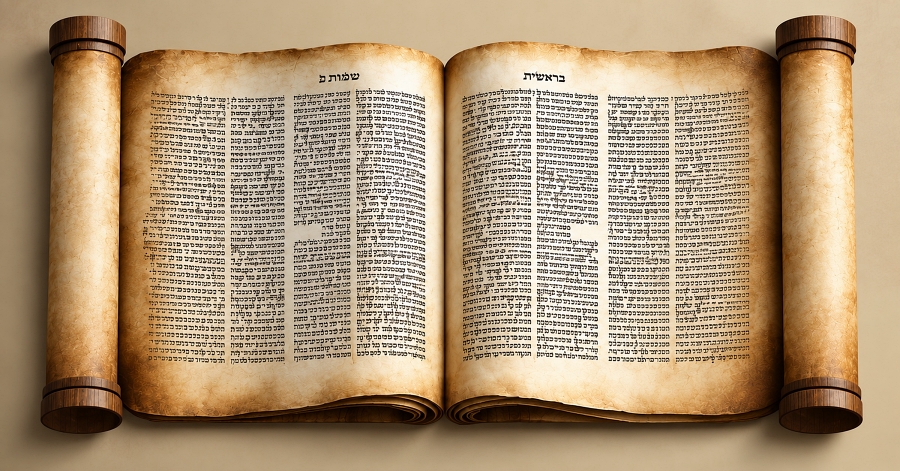
    And he came to Nazareth, where he had been brought up. And as was his custom, he went to the synagogue on the Sabbath day, and he stood up to read. And the scroll of the prophet Isaiah was given to him. He unrolled the scroll and found the place where it was written, “The Spirit of the Lord is upon me, because he has anointed me to proclaim good news to the poor.

    He has sent me to proclaim liberty to the captives and recovering of sight to the blind, to set at liberty those who are oppressed, to proclaim the year of the Lord’s favor.” And he rolled up the scroll and gave it back to the attendant and sat down. And the eyes of all in the synagogue were fixed on him. And he began to say to them, “Today this Scripture has been fulfilled in your hearing.” Luke 4:16-21 ESV

    It was a familiar passage to his audience, taken from Isaiah 61. He didn’t finish reading the passage. The next line in Isaiah is: “to proclaim the year of the Lord’s favor, and the day of vengeance of our God”

    That’s significant. When Jesus was reading in the synagogue, He declared that He was the Messiah. It was fulfilled in their hearing. If He had said “the day of the vengeance of our God” was fulfilled, then there would be no time for anyone else to come to faith.

    The day of vengeance (mentioned in several other places in Scripture) is when the Lord finally deals with His enemies. Anyone who is not a believer is an enemy of God.

    Had Jesus read the rest of that passage, time would have been up. All hope for the lost would be gone.

    That day is coming. Jesus is returning to fulfill it. In the interim, though, there is time for God’s enemies to be reconciled through faith in Christ. 

    Don’t waste a moment longer. Time truly is limited because none of us knows the day or hour of His return.

    Praise God, He left those words unsaid … for the moment.

    Kevin

    SUMMARY

    Jesus stopped reading Isaiah’s scroll one line too soon. He left out the day of vengeance, and grace is still open to you and me.

    TAKEAWAY

    You are still living in the year of the Lord’s favor, not the day of His vengeance.

    Your chance to be reconciled to God through faith in Christ is still open right now.

    You don’t know the day or hour of Christ’s return, so this isn’t the moment to delay

    You might also like

    The gospel – the greatest news

    Why everyone knows the truth – even if they deny it
    Do you see things through the eyes of faith

    Vantage point

  • Seven Sayings of Christ on the Cross

    Part 1 of a devotional series

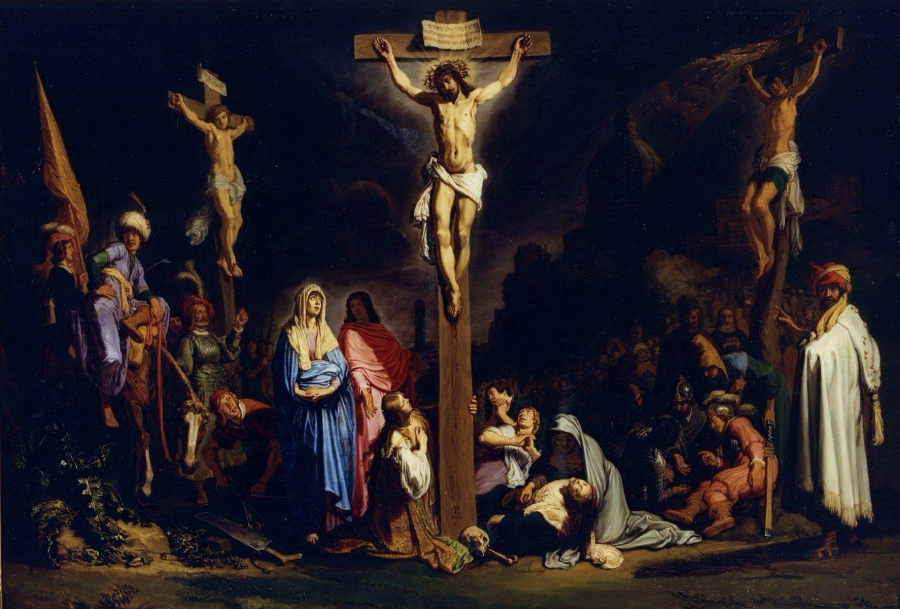
    Crucifixion by Rembrant - classic Chrsitian art

    Today’s classic Christian art piece is Rembrandt’s depiction of the crucifixion. Today, we begin looking at the so-called “Seven Sayings on the Cross,” or, as it is sometimes called, the “Seven Words of Jesus on the Cross.”

    Seven words, or sayings, were recorded as being said by Jesus while on the cross. Each of them is profound, although we typically skip over them. They have occupied the minds of many theologians and pastors, and numerous books have been written on them.

    There have been more deaths than could be counted since the fall from grace in the Garden of Eden, but there has only been one like this. Jesus’ death is unique. Hundreds of thousands (or more) of people died by crucifixion, but Jesus’ death stands alone. Untold people have been innocent of the crimes they were killed for, but only Jesus was sinless and totally innocent.

    Mankind and the powers of darkness did their worst to keep the light from shining because they love the dark. The very act they used for the vilest of purposes was orchestrated by God to work the opposite. They chose to silence Jesus. His death glorifies God and proclaims the saving truth of the gospel for all who seek the light.

    In their mocking, Jew and Gentile alike called him “King of the Jews,” all the while missing that the King of Kings and Lord of Lords was in their presence.

    Jesus was raised from the dead, but the Scriptures also record that truth for others. The difference is that Jesus did not stay dead.

    Indeed, humankind’s wisdom and ways are not God’s wisdom and ways. A peasant boy, born in a subjugated country not much more than a tiny Roman colony, was killed horrifically… not the way the world would script the origins of the Savior of the world.

    Every word spoken by Jesus, as recorded by the gospel writers, is packed full of meaning. A mere handful of phrases spoken in a time of unbelievable agony, with each and every word spoken for a purpose and with power.

    Jesus had the power to lay down His life or pick it up; the full power of the Godhead was available to Him. He could have spoken nonstop or not spoken at all. The fact that He is sovereign over all things, including his pain-filled utterances, should cause us to pay close attention to the words He chose to speak. 

    Church history has typically named the sayings (albeit with some variance) as follows…

    The Word of Forgiveness 

    And Jesus said, “Father, forgive them, for they know not what they do.”  Luke 23:34a ESV

    The Word of Salvation 

    … he said, “Jesus, remember me when you come into your kingdom.” And he said to him, “Truly, I say to you, today you will be with me in paradise.” Luke 23:42-43 ESV

    The Word of Affection

    … standing by the cross of Jesus were his mother and his mother’s sister, Mary the wife of Clopas, and Mary Magdalene. When Jesus saw his mother and the disciple whom he loved standing nearby, he said to his mother, “Woman, behold, your son!” John 19:25-26 ESV

    The Word of Anguish  

    And about the ninth hour Jesus cried out with a loud voice, saying, “Eli, Eli, lema sabachthani?” that is, “My God, my God, why have you forsaken me?” Matthew 27:46 ESV

    The Word of Suffering

    After this, Jesus, knowing that all was now finished, said (to fulfill the Scripture), “I thirst.” John 19:28 ESV

    The Word of Victory 

    When Jesus had received the sour wine, he said, “It is finished,” and he bowed his head and gave up his spirit.  John 19:30 ESV

    The Word of Contentment

    Then Jesus, calling out with a loud voice, said, “Father, into your hands I commit my spirit!” And having said this he breathed his last. Luke 23:46 ESV

    These sayings are a few short sentences, not many words at all, even less in the original Greek manuscripts. Still, they are profound and worth meditating on. Each one tells us something about the very heart of God.

    Tomorrow, we will begin with the words of forgiveness.

    Be blessed

    Kevin

    SUMMARY

    We are walking through the setting for the Seven Sayings, seven brief but weighty statements Jesus spoke from the cross. Though only a handful of words, each one reveals something of the heart of God and deserves our full attention.

    TAKEAWAY

    Jesus’ death is utterly unique in history, He was the only truly innocent, sinless man to die this way

    What men and the powers of darkness meant for evil, God orchestrated for good, using the cross to glorify Himself and reveal the gospel

    Jesus was sovereign over His own suffering, so the words He chose to speak while dying carry deliberate weight and purpose

    YOU MIGHT ALSO LIKE

    The Seven Sayings – Introduction

    The gospel – The best news ever

    God revealed – why no one has a valid excuse