
Wheat field Banner

Category: Uncategorized

  • Issue 1625 – Are You Ready? – December 11, 2024

    Issue 1625 – Are You Ready? – December 11, 2024

    A banner with a Santa hat - the text reads, "Are you ready?"

    Good morning. It’s December 11th, and only two  weeks until Christmas.

    Two weeks to Christmas? How did that happen? It snuck up on me. I’m not ready!

    Ready or not, it’s coming soon. Are you ready?

    The thought that Christmas is only two weeks away instills panic in many people. Some have been ready since January, others by December 1st, and others are mostly ready. A good number of people haven’t even started their Christmas prep.

    Something in the fallen human psyche often causes us to want to procrastinate. For example, we all know it’s winter, and the likelihood of a winter car breakdown or getting stuck in traffic for hours is high. Yet, how many of us have any form of emergency gear in the car?

    It’s winter, and we know there is a good possibility of power grid failure for days or more. Yet, relatively few people are prepared for even two or three days without power, heat, or water. Even the government recognizes we should all have three days to two weeks of emergency food and water on hand. If the government thinks that things will return to normal in two weeks in the event of a disaster, you know it will most likely take far longer. 

    We see that played out in every major hurricane, flood, ice storm, and manmade or natural disaster. The government and relief agencies do their best, but more is needed.

    We know all that and still fail to prepare.  It’s called normalcy bias. One source describes it this way: “Normalcy bias, or normality bias, is a cognitive bias which leads people to disbelieve or minimize threat warnings. Consequently, individuals underestimate the likelihood of a disaster, when it might affect them, and its potential adverse effects. The normalcy bias causes many people to prepare inadequately for natural disasters, market crashes, and calamities caused by human error. About 80% of people reportedly display normalcy bias during a disaster?”

    It also plays out in other ways. I know people who know that the Christian faith is the truth, but they aren’t prepared to surrender to Jesus yet. They have some arbitrary date or event in mind that they want to pass before becoming believers.

    Millions, perhaps billions of people, have heard the call of the Holy Spirit yet refuse Him, thinking they are somehow immune to the consequences.

    Yet the Scriptures clearly state that everyone will hear the truth, and there will be consequences for what one does with that information.

    “Behold, I am coming soon, bringing my recompense with me, to repay each one for what he has done. I am the Alpha and the Omega, the first and the last, the beginning and the end.” Revelation 22:12-13

    He is coming back to make all things right.

    “But concerning that day or that hour, no one knows, not even the angels in heaven, nor the Son, but only the Father. Be on guard, keep awake. For you do not know when the time will come.It is like a man going on a journey, when he leaves home and puts his servants in charge, each with his work, and commands the doorkeeper to stay awake. Therefore stay awake—for you do not know when the master of the house will come, in the evening, or at midnight, or when the rooster crows,or in the morning—lest he come suddenly and find you asleep.And what I say to you I say to all: Stay awake.” Mark 13:32-37

    Not being ready for Christmas might be uncomfortable. Not being ready for Jesus will be disastrous.

    Are you prepared?

    Be blessed

    Hallelu Yah / Praise God 

    Kevin

    Gleanings From The Word

    Experience an extraordinary God in ordinary life. 

    Soli Deo Gloria (For the glory of God alone)

    Never let the enemy tell you that you are worthless or insignificant. Your value in God’s eyes is so great that it was worth dying for. You are a blessing to the world. You are so precious to God that his plan for heaven will not be complete without you.

    __________________________________________ 

    Did you know that we have an email version? It has the same great content but in a different format.

    Subscribe today: https://mailchi.mp/f27bbeb09c22/gleanings-1 

    For an archive of many back issues, visit our website at https://gleaningsfromtheword.com.

    © 2024 Gleanings From the Word, K.F. “Kevin” Corbin. All Rights Reserved. Used by permission.
  • Issue 1624 – Carols – December 10, 2024

    Issue 1624 – Carols – December 10, 2024

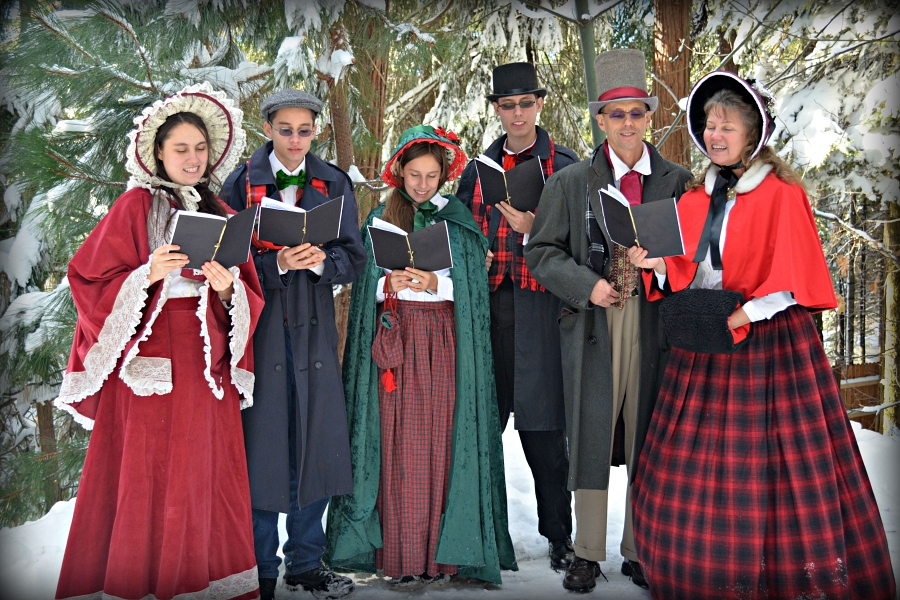
    Christmas carolers in Victorian dress
    Christmas Carolers

    Last night, our community group discussed  preferences for Christmas songs. It wasn’t on our agenda; it just happened in casual conversation.

    People have decided opinions about what types of songs are appropriate and when they should be played.

    I’m partial to songs like “Six White Boomers,””Grandma Got Run Over by a Reindeer,”  “All I Want for Christmas is My Two Front Teeth,” or “I Want a Hippopotamus for Christmas.” Other people, not so much so. I enjoy the faith songs as well,

    Some people love almost any type of Christmas song, while others love only those based on Scripture. Our youngest son starts playing Christmas music as soon as the services are finished on Remembrance Day (November 11), but others feel it is inappropriate to begin until after December 1st. I know a man who believes there should be no Christmas music until December 15th.

    That conversation got me thinking. What is a carol anyway? What differentiates a carol from some other type of song?

    One writer says, “Carols, it seems, are as hard to define as they are fun to sing. We usually think of them as “religious” songs, but some medieval carols are amorous, humorous, satirical, political, or convivial. We also think of them as “popular” songs, but not in the same sense that folk songs are popular.”

    One source says this, “sometimes accompanied by a dance. A caroller (or caroler) is someone who sings carols, and is said to be carolling (or caroling).

    Today, the carol is represented almost exclusively by the Advent carol, the Christmas Carol, and to a lesser extent by the Easter carol; however, despite their present association with religion, this has not always been the case.”

    Another source adds this clarification, “In the Middle Ages, the one indispensable element of a carol was its literary structure: the carols had uniform stanzas and a “burden,” that is, a refrain sung at the beginning of each song as well as after each stanza. A familiar example of a song with a burden is “All Things Bright and Beautiful.”

    Most of the Christmas music we hear on the radio can rightly be called a carol, whether we like the content or not. 

    Some of our faith-based Christmas songs can contain errors or debatable information.

    “We Three Kings” is a perennial favorite, but the Bible doesn’t tell us how many magi there were or that they were kings.

    “The Friendly Beasts” sings of the contributions of the donkey, cow, sheep, and dove. Yet the Bible is silent on what animals (if any) were at the manger.

    “Little Donkey,” sings of the donkey carrying Mary to Bethlehem. It’s possible Mary rode one, but the Scriptures are silent.

    The ever-popular “Angels We Have Heard on High” regales us with the idea that on the first Christmas night, angels sang praises to God. The phrase Gloria, in Excelsis  Deo,” is Latin for Glory to God in the highest” and comes from the first words spoken by the angels to the shepherds.

    And in the same region there were shepherds out in the field, keeping watch over their flock by night. And an angel of the Lord appeared to them, and the glory of the Lord shone around them, and they were filled with great fear. And the angel said to them, “Fear not, for behold, I bring you good news of great joy that will be for all the people. For unto you is born this day in the city of David a Savior, who is Christ the Lord. And this will be a sign for you: you will find a baby wrapped in swaddling cloths and lying in a manger.” And suddenly there was with the angel a multitude of the heavenly host praising God and saying, “Glory to God in the highest, and on earth peace among those with whom he is pleased!”When the angels went away from them into heaven, the shepherds said to one another, “Let us go over to Bethlehem and see this thing that has happened, which the Lord has made known to us.” Luke 2:8-15

    The song captures the message, but the Scriptures say nothing about angels singing.

    What’s my point this morning? I guess it’s simply to enjoy the songs you like and give grace to others who want something else. That sounds suspiciously like loving our neighbors.

    Be blessed

    Hallelu Yah / Praise God 

    Kevin

    Gleanings From The Word

    Experience an extraordinary God in ordinary life. 

    Soli Deo Gloria (For the glory of God alone)

    Never let the enemy tell you that you are worthless or insignificant. Your value in God’s eyes is so great that it was worth dying for. You are a blessing to the world. You are so precious to God that his plan for heaven will not be complete without you.

    __________________________________________ 

    Did you know that we have an email version? It has the same great content but in a different format.

    Subscribe today: https://mailchi.mp/f27bbeb09c22/gleanings-1 

    For an archive of many back issues, visit our website at https://gleaningsfromtheword.com.

    © 2024 Gleanings From the Word, K.F. “Kevin” Corbin. All Rights Reserved. Used by permission.