
Do you really know Jesus?
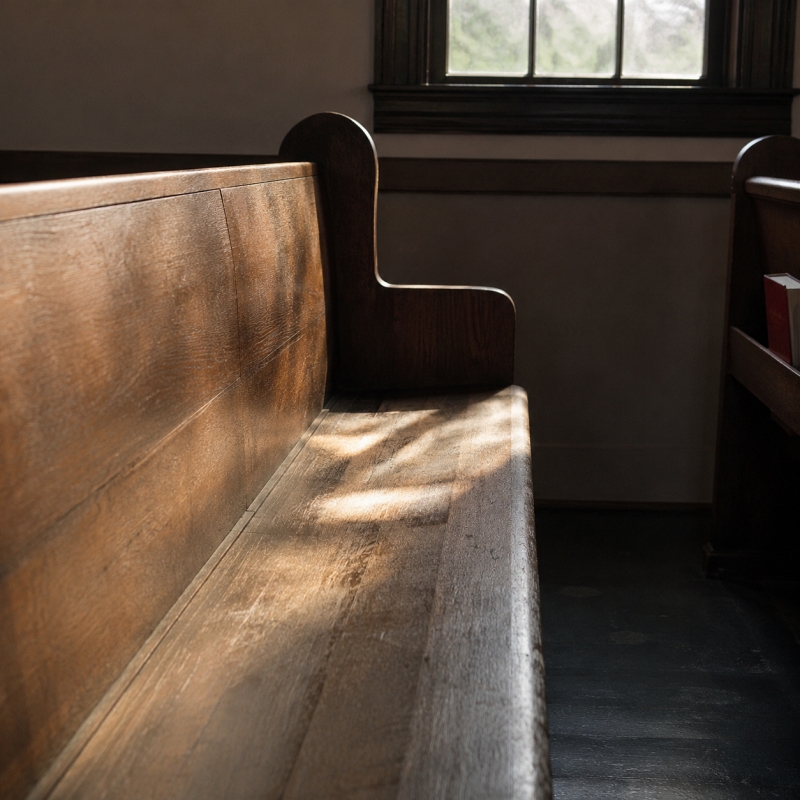
I was thinking about Pat, a late friend from “the cowboy church,” recently. She attended and served at churches her entire life but later in life realized she didn’t know Jesus. She had thought that attending church and doing “Christian” things made her a Christian. After truly becoming a believer, she was an unstoppable force, not perfect by any stretch of the imagination, but with a zeal matched by very few.
I have met so many people like that, faithful in church, but without Jesus. What a tragedy it will be when He says to them, “Depart from me; I never knew you.”
I’m not judging them; I’m going by the fact that they told me of their conversion experiences later. It’s not for me to judge someone’s salvation; only God himself can do that.
Being near the holy doesn’t make you holy, or, as a nicely alliterated sermon title, “Proximity doesn’t always produce a profession.” That shouldn’t surprise us. Judas Iscariot walked with Jesus for three years and didn’t believe. Jesus worked signs and wonders, and people didn’t come to him.
When many of his disciples heard it, they said, “This is a hard saying; who can listen to it?” But Jesus, knowing in himself that his disciples were grumbling about this, said to them, “Do you take offense at this? Then what if you were to see the Son of Man ascending to where he was before? It is the Spirit who gives life; the flesh is no help at all. The words that I have spoken to you are spirit and life. But there are some of you who do not believe.” (For Jesus knew from the beginning who those were who did not believe, and who it was who would betray him.) And he said, “This is why I told you that no one can come to me unless it is granted him by the Father.” After this many of his disciples turned back and no longer walked with him. John 6:60-66 ESV
I have met people who have told me, “I tried Christianity, but it didn’t work for me.” Of course it didn’t. “Christianity” has no power to change anyone. We must be changed by the Holy Spirit, be born again and be in the process of being made Christ. God has the power, not some vague definition of Christianity.
The Apostle Paul warns
For it is impossible, in the case of those who have once been enlightened, who have tasted the heavenly gift, and have shared in the Holy Spirit, and have tasted the goodness of the word of God and the powers of the age to come, and then have fallen away, to restore them again to repentance, since they are crucifying once again the Son of God to their own harm and holding him up to contempt. For land that has drunk the rain that often falls on it, and produces a crop useful to those for whose sake it is cultivated, receives a blessing from God. But if it bears thorns and thistles, it is worthless and near to being cursed, and its end is to be burned. Hebrews 6:4-8 ESV
It’s possible to go to church, have a Christian family or family members, and receive some of God’s blessings by being in their proximity without knowing Jesus. That’s a sobering thought.
It’s why I believe that every sermon should point to the cross explicitly or implicitly. It doesn’t have to be the key point of the message, but it’s likely in most (every?) congregations that there is someone there who doesn’t know Jesus.
What are you trusting in? If you aren’t trusting in Jesus by faith, you need to change direction.
May you know the Lord and be bless by Him,
Kevin
Did you enjoy this devotional? Subscribe today
SUMMARY
I think about my late friend Pat, who served faithfully in church her whole life before realizing, late, that she’d never actually known Jesus. Her story is a reminder that proximity to church doesn’t equal salvation, and every one of us needs to ask honestly what we’re really trusting in.
TAKEAWAY
Being near church, Christian family, or “Christian” activity doesn’t make anyone a believer — only faith in Christ does.
Scripture shows this is nothing new: Judas walked with Jesus for three years without believing, and many disciples turned back after a hard teaching (John 6:60-66).
Hebrews 6:4-8 warns that tasting the blessings of God’s presence isn’t the same as bearing real fruit — the question every reader must answer is what they’re trusting in.
YOU MIGHT ALSO LIKE
The gospel, the best news ever
Read the Bible to know the truth